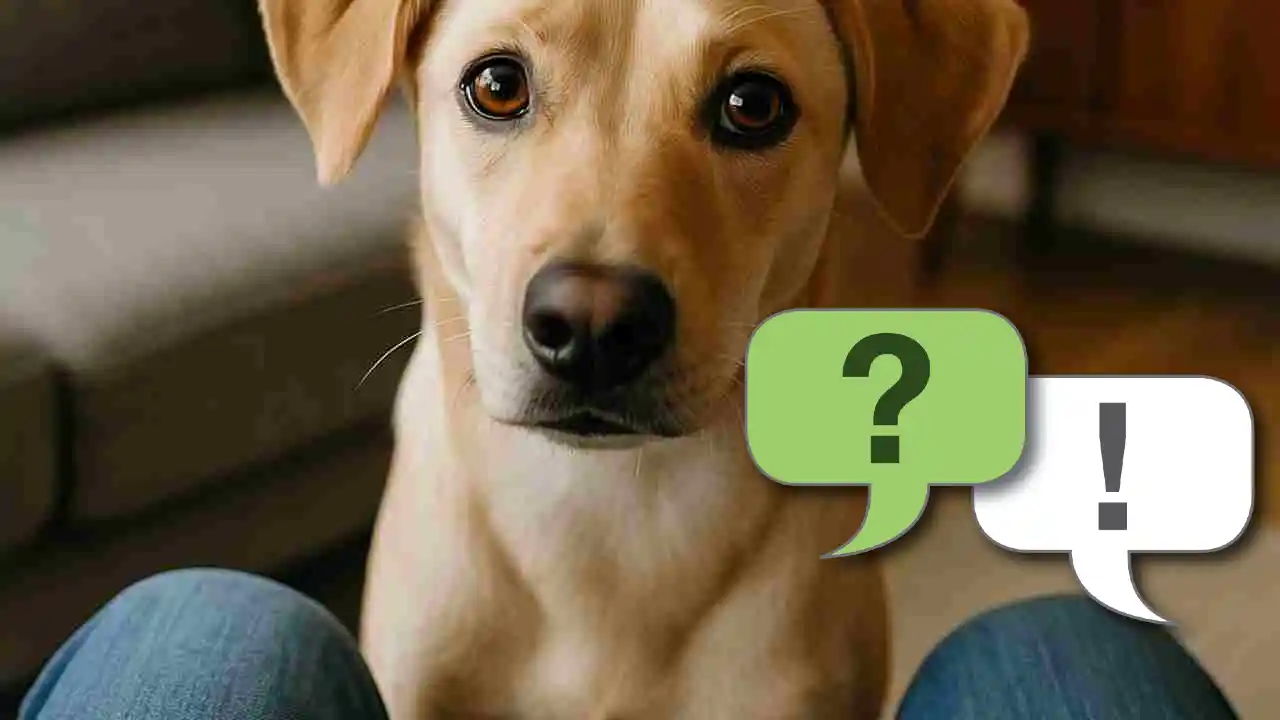
Ever caught your dog locked into an intense staring contest with you… while you’re brushing your teeth? Or maybe while you’re eating dinner, folding laundry, or (yikes) using the bathroom?
If you’ve ever wondered, “Why does my dog stare at me like that?”, you’re not alone — and no, it’s (probably) not because they’re plotting world domination.
🎯 Quick Answer
Why does my dog stare at me? Dogs stare at their owners primarily to communicate needs (food, bathroom, play), express love and bonding (oxytocin release), read your body language for cues, or simply because they’ve learned that staring gets results. Occasionally, prolonged staring with tense body language can signal stress or health issues requiring veterinary attention.
“As a Certified Dog Behavior Consultant, I often see owners confused by ‘the stare’. In my experience, most dogs aren’t just hungry—they are performing a complex social behavior called ‘social referencing’ to check if you’re happy or stressed.”
In this comprehensive guide, we’ll dive into the 7 most surprising reasons behind your dog’s unblinking gaze, backed by veterinary science and canine behavior research. We’ll explore the emotional, biological, and behavioral meanings of canine eye contact, and what your pup might be trying to tell you — without saying a word.
Let’s decode those puppy eyes, shall we?
1. 🐾 Your Dog Is Trying to Tell You Something (No, Really)
Staring is one of your dog’s primary communication tools.
Dogs don’t speak in sentences — but they’re brilliant at reading our body language and expressing themselves through theirs. A long, focused stare might be your dog’s version of:
- “I want to go outside.”
- “You forgot to feed me.”
- “You dropped a piece of chicken on the floor three hours ago and I never forgot.”
“Dogs learn that eye contact gets results. It’s like their version of sending a text message,” says Dr. Emily Carter, Canine Behavior Specialist.
What to Do:
Next time your dog’s giving you the look, check the basics: food, water, bathroom, walk time. Odds are, they’re asking, not judging.
2. 🧠 Dogs Use Eye Contact to Bond (Just Like We Do)
Eye contact isn’t just about communication — it’s emotional glue.
When dogs gaze into their humans’ eyes, studies show it releases oxytocin in both species. Yes, the same “love hormone” that bonds parents to babies.
A 2015 study in Science found that mutual gazing between dogs and their owners increased oxytocin levels, strengthening trust and attachment.
This means your dog might be staring simply because… they love you.
Signs it’s a loving stare:
- Soft eyes, relaxed posture
- Gentle blinks
- No tense body language or growling
3. 🍗 Sometimes, It’s Just About Snacks
Let’s be honest — dogs are masters of food-based manipulation.
If your pup tends to stare most while you’re cooking or eating, they’ve probably learned that “the stare” = food reward.
This behavior is known as operant conditioning. If you’ve ever caved and shared a bite, you’ve taught them that staring works.
What to Watch:
- Timing of the stare (during meals?)
- Whining or pawing that follows
- The infamous “head tilt” that seals the deal
4. 🧘♂️ Dogs Look to Us for Cues and Guidance
In new situations, dogs often stare because they’re looking to you for direction.
They’re watching for cues in your body language, voice tone, or even facial expressions. Dogs are surprisingly attuned to subtle signals — it’s how they learn what’s safe or dangerous.
“Staring is part of their learning process. They’re reading your face like a map,” explains Lisa Monroe, Certified Dog Trainer and Behaviorist.
Examples:
- During training
- At the dog park
- When meeting new people
If your dog looks at you before approaching something, they’re saying, “Is this okay?“
5. 😐 It Could Be a Sign of Stress or Discomfort
Deep Dive: A stare isn’t the only silent signal. If your dog’s gaze is paired with a “Whale Eye” or lip licking, they might be deeply uncomfortable. Read our guide on The 7 Silent Signs of Dog Stress to protect your family and your pet.
Not all stares are affectionate or curious — some are a subtle sign of anxiety.
A stiff, hard stare, especially with a tense body, can mean your dog is stressed, confused, or unsure. In rare cases, especially when paired with growling or stillness, it can be a warning.
Red flags to look for:
- Wide eyes or visible whites (“whale eye”)
- Stiff body posture
- Tail held low or tucked
- Growling or freezing
If your dog is staring like this frequently, it may be time to speak with a vet or a certified canine behaviorist.
6. 🕐 They’re Waiting for Something Exciting to Happen
Does your dog stare most intensely at specific times of day? They’ve memorized your routine — and they know what comes next.
Dogs have an incredible internal clock and can predict when it’s walk time, dinner time, or “you usually play with me now” time. The staring is their way of saying, “I know what’s supposed to happen next, and I’m ready!”
Common Trigger Times:
- Morning routine: You always walk them after coffee
- Before work: They know you’re about to leave
- 5 PM: Universal “dinner is coming” stare
- When you grab keys/leash: They’ve connected these objects to fun activities
A 2020 study in Animal Cognition found that dogs can discriminate between different human activities and anticipate outcomes based on learned patterns.
What to Do:
This is actually a positive sign of intelligence and bonding. Your dog has studied you like a college course! If the staring becomes obsessive, though, try mixing up your routine slightly to reduce anxiety around specific triggers.
7. 🏥 Medical Reasons You Shouldn’t Ignore
While most staring is harmless, sudden changes in staring behavior can sometimes indicate underlying health issues.
⚠️ Red Flags That Warrant a Vet Visit:
Cognitive Dysfunction Syndrome (Canine Dementia):
- Staring blankly at walls or into space (not at you specifically)
- Seeming “lost” or confused in familiar places
- Changes in sleep-wake cycles
- Most common in dogs 10+ years old
Vision Problems:
- Staring with dilated pupils
- Bumping into furniture
- Reluctance to go into dark rooms
- Cloudy or red eyes
Neurological Issues:
- Head tilting while staring
- Loss of balance or coordination
- Seizures or tremors
- Sudden personality changes
Pain or Discomfort:
- Staring combined with whining
- Reluctance to move
- Changes in eating or drinking
- Restlessness or pacing
“If your dog’s staring behavior changes dramatically—especially if it’s paired with other symptoms—don’t wait. Early intervention can make a huge difference in treatment outcomes,” advises Dr. Jennifer Martinez, DVM, Veterinary Neurologist.
When to Call Your Vet:
- Staring has increased suddenly over days or weeks
- Your dog seems “not there” when staring (unresponsive to name)
- Other behavioral changes accompany the staring
- Your senior dog (8+ years) starts staring at walls frequently
Bottom line: Trust your gut. You know your dog best. If something feels “off,” it’s always better to get it checked.
Final Thoughts: What to Do When Your Dog Stares
The next time your dog locks eyes with you, take a moment. Instead of brushing it off, ask:
- Are they trying to tell me something?
- Are they asking for comfort or direction?
- Am I holding a sandwich?
Ultimately, your dog’s stare is a window into how they experience the world — and how deeply they’re connected to you.
So go ahead. Stare back. Give them a wink. Maybe even a snack (just this once).
Your dog’s staring behavior is also deeply connected to their emotions and stress levels. Explore what emotions dogs actually feel, why they dream about you, and signs of hidden stress to deepen your understanding of their complex inner world. Plus, discover why they stare so intently while pooping (yes, there’s a reason!).
❓ FAQ: Dog Staring Behavior Explained
Why does my dog stare at me all the time?
Dogs stare to communicate, bond, and learn from you. Constant staring can mean they trust you, want something, or are waiting for cues. If your dog stares throughout the day, they’re likely:
- Monitoring your activities to predict what happens next (walk time, dinner, play)
- Expressing affection through eye contact (releases oxytocin in both of you)
- Waiting for permission or direction on what to do next
Normal frequency: Multiple times per day, especially around routine activities Concerning frequency: Non-stop staring for hours without responsiveness to their name
Is it bad if my dog stares at me?
Usually, no! It’s often a positive behavior showing trust and bonding. However, context matters:
✅ Healthy staring:
- Soft, relaxed eyes
- Wagging tail or relaxed body
- Responsive to your voice
- Happens during meals, before walks, or during training
⚠️ Concerning staring:
- Hard, fixed stare with tense body
- Accompanied by growling or raised hackles
- Blank stare with no recognition (possible cognitive issues)
- Sudden change from normal behavior
If the stare is intense, tense, and paired with signs of discomfort, it may indicate stress, fear, or medical issues.
Why does my dog stare at me when I sleep?
Several adorable (and practical) reasons:
- Guarding instinct: Your dog sees you as vulnerable while sleeping and takes on a protective role
- Waiting for you to wake up: They’re bored, need to go outside, or it’s breakfast time
- Circadian rhythm: Dogs often wake before humans and simply wait patiently
- Fascination: You make weird noises when you sleep, and they’re curious
- Checking if you’re okay: If you move or make sounds, they’re monitoring you
Fun fact: Studies show dogs often position themselves to keep both their owners and the room’s entrance in view—classic watchdog behavior!
Should I stare back at my dog?
It depends on the context:
✅ Safe to stare back:
- During loving moments (petting, cuddling)
- Your own dog who trusts you
- Accompanied by soft voice and relaxed body language
- During training sessions with positive reinforcement
❌ Avoid direct eye contact:
- Unfamiliar or fearful dogs (seen as a threat)
- During resource guarding situations (dog protecting food/toys)
- Anxious dogs showing whale eye or tension
- Working dogs while they’re concentrating
Best practice: Soft gazes with slow blinks (called “dog kisses”) are a safe way to show affection without challenging your dog.
Why does my dog stare at me when pooping?
This is actually one of the most adorable displays of trust! Here’s the science:
Evolutionary vulnerability: In the wild, pooping is the most vulnerable moment for any animal. Predators often attack during elimination because prey can’t run away quickly.
You’re their lookout: By staring at you, your dog is essentially saying, “Hey, I’m in a vulnerable position here. Can you watch my back?” They trust you to alert them of danger.
Pack behavior: Wolves and wild dogs maintain visual contact with pack members during elimination for safety. Your dog sees you as their pack.
Reading your body language: If you suddenly tense up or look alarmed, your dog wants to know immediately so they can react.
What to do: Don’t break eye contact! It might feel weird, but you’re providing security. A reassuring nod or soft voice can help them feel protected.
Learn more about this phenomenon in our deep dive: Why Does My Dog Stare at Me While Pooping?
Why does my dog stare at nothing?
If your dog frequently stares at walls, corners, or “nothing,” several explanations exist:
Normal reasons:
- Superior senses: They hear or smell something you can’t (rodents in walls, distant sounds)
- Visual acuity: Dogs see movement better than humans; they might spot insects or shadows
- Curiosity: Investigating new patterns or reflections
Concerning reasons:
- Cognitive Dysfunction Syndrome (CDS): Common in senior dogs, similar to dementia
- Vision problems: Cataracts, progressive retinal atrophy, or blindness
- Canine Compulsive Disorder: Repetitive behaviors requiring behavioral intervention
- Neurological issues: Seizures or focal seizures (staring spells)
When to worry: If your dog seems “absent” during these stares, doesn’t respond to their name, or if this is a new behavior in an older dog, consult your vet.
Do different dog breeds stare more than others?
Yes! Breed characteristics influence staring behavior:
High-staring breeds:
- Border Collies: Bred to use “the eye” to control sheep; intense stares are instinctive
- Australian Shepherds: Herding breeds with strong eye contact
- German Shepherds: Guardian breeds monitor owners closely
- Retrievers (Labs, Goldens): Bred to watch handlers for commands
Lower-staring breeds:
- Independent breeds (Huskies, Basenjis, Shiba Inus) stare less frequently
- Scent hounds (Beagles, Bloodhounds) rely more on nose than eyes
Breed isn’t everything: Individual personality, training, and bonding strength matter more than breed alone.
Can staring be trained or modified?
Absolutely! Both increasing and decreasing staring can be trained:
To encourage eye contact (training purposes):
- Use the “watch me” or “look” command
- Reward with treats when your dog makes eye contact
- Gradually increase duration before rewarding
- Useful for focus during training and in distracting environments
To reduce excessive staring:
- Don’t reinforce staring with food or attention
- Redirect to a command (“place,” “settle”)
- Address underlying anxiety if present
- Provide more mental stimulation to reduce demand behaviors
Professional help: If staring becomes obsessive or compulsive, work with a certified dog behaviorist (CBCC-KA or CDBC credentials).
What’s the difference between staring and gazing?
Great question! There’s a subtle but important difference:
Staring (neutral or negative):
- Hard, fixed eye contact
- Minimal blinking
- Often accompanied by tense body
- Can signal challenge, stress, or demand
- Duration: Prolonged without breaks
Gazing (positive):
- Soft eyes with relaxed face
- Frequent slow blinking
- Relaxed body posture
- Signals affection, trust, bonding
- Duration: Intermittent with natural breaks
Think of gazing as the dog equivalent of a loving look between partners, while staring is more intense and purposeful.
🐶 Want More Like This?
Explore our other articles on dog behavior, bonding tips, and travel adventures with your pup at DogCityGuide.com!
🐶 More:
How to Stop Your Dog from Digging Holes in the Yard (Without Losing Your Mind!)!
Why Does My Dog Eat Grass? The Real Reasons (And When to Worry)!
Is Your Dog Sleeping Too Much? What You Should Know and When to Worry!