🔥 TRENDING 2025
8 min read
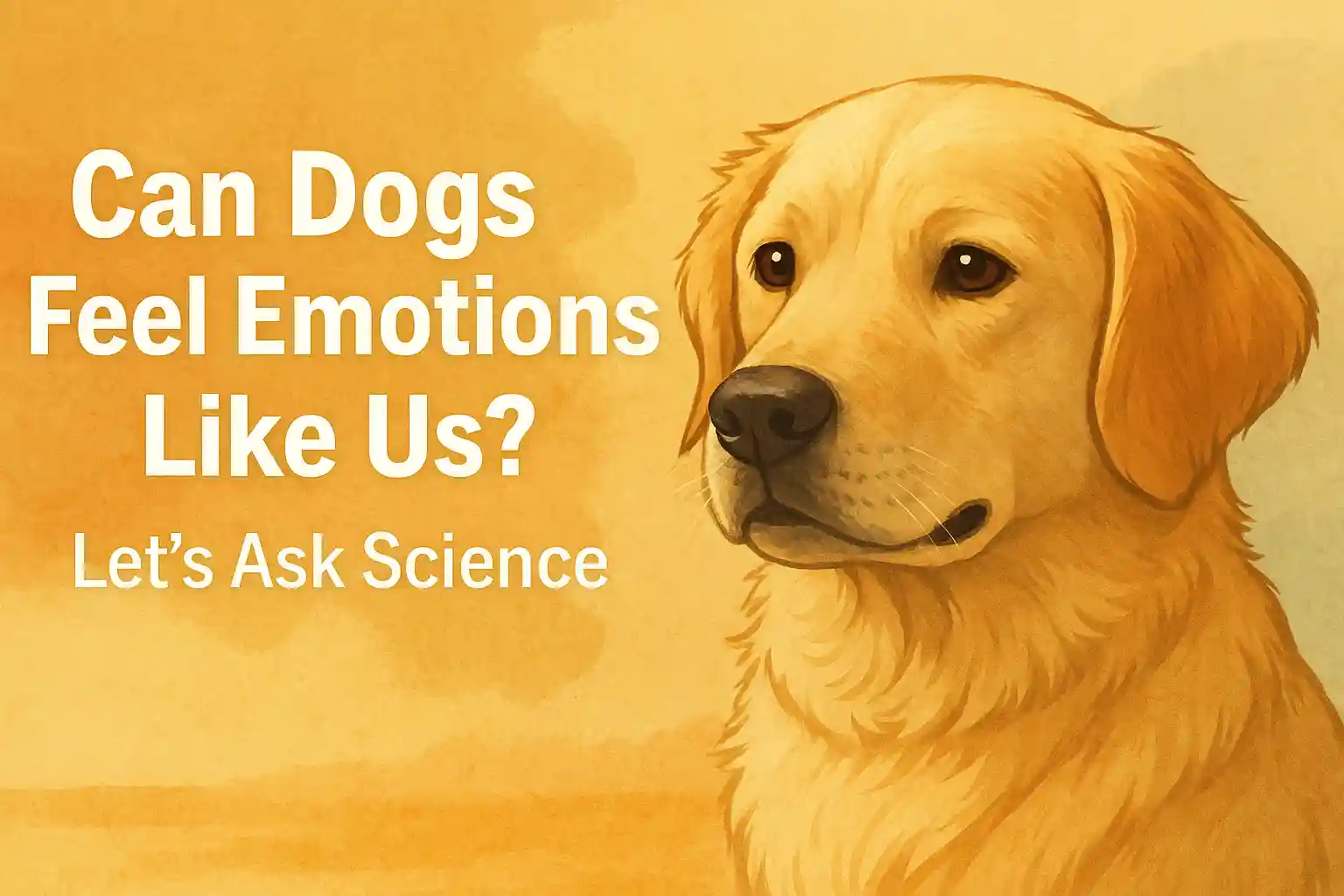
Your Dog IS Reading Your Mind (And Science Can Prove It)
Groundbreaking 2025 research reveals dogs experience 7 distinct emotions—but guilt isn’t one of them. What your dog actually feels will change how you see them forever.
🧠 The Emotion Your Dog CAN’T Feel (And Why You Think They Can)
Here’s the truth that shocked researchers:
That “guilty look” when your dog destroys the couch? It’s not guilt. It’s your dog reading YOUR body language and reacting to your anger—not their own shame.
A landmark 2025 study tested dogs with hidden cameras. The findings were stunning:
- Dogs showed the same “guilty” behavior whether they did something wrong or not
- The trigger wasn’t their action—it was your facial expression
- Dogs are emotion-reading masters, but they don’t experience human-style guilt or shame
💡 Why This Changes Everything
Stop saying “he knows what he did.” Instead, focus on what dogs DO feel: connection, stress relief through your presence, and the desperate need to make you happy again.
🎭 The 7 Emotions Science Confirms Dogs Actually Experience
Based on neurological studies using fMRI brain scans and hormonal analysis, here’s the complete list:
1. Pure Joy
Brain scans show the same “reward center” lighting up in dogs as humans when seeing their owner after absence.
Physical signs: Whole-body wagging, “smile” (open mouth, relaxed jaw), play bow position
2. Love & Bonding
Oxytocin (the “love hormone”) spikes when dogs make eye contact with owners.
Physical signs: Soft eye contact, leaning into you, bringing toys as “gifts”
3. Fear & Anxiety
Dogs have the same amygdala response to threats as humans—and remember scary events long-term.
Physical signs: Tucked tail, whale eye, panting, hiding
4. Sadness & Grief
Dogs can enter depression-like states, showing decreased motivation when separated from bonded humans or dogs.
Physical signs: Loss of appetite, sleeping more, ignoring favorite toys
5. Jealousy (Resource Guarding)
Not human jealousy—more like “attachment protection.” Dogs can compete for attention and proximity.
Physical signs: Pushing between you and another dog, attention-seeking behaviors
6. Curiosity & Interest
Dogs show sustained attention and exploration behaviors driven by genuine curiosity (not just food-seeking).
Physical signs: Head tilt, intense staring, ears forward, tail mid-height
7. Excitement & Anticipation
Dogs can predict events (walk time, meals) and experience genuine anticipatory excitement.
Physical signs: Zoomies, spinning, barking, jumping, pacing near door
🔬 The Breakthrough Study That Changed Everything
The “Puzzle Box” Experiment (2025)
Researchers gave identical puzzle boxes to domesticated dogs and wolves raised by humans.
- The puzzle: Get food from a locked box.
- Result: Wolves tried longer; dogs tried briefly, then looked directly at the human’s face.
This suggests a uniquely dog-evolved trait: help-seeking through social connection.
Translation: your dog doesn’t just want a solution. They want you in the loop.
💝 How Dogs Show Love: The Science You Can See
Forget Hollywood. Here’s what love actually looks like in dog language:
The “Soft Eye” Gaze
Relaxed eyes + soft focus often signals safety and connection. Many studies link eye contact to bonding hormones.
The “Gift” Behavior
Bringing a toy can be sharing, invitation, or comfort behavior—often a social “bonding” signal.
The “Vulnerable Sleep”
Belly-up sleep and relaxed posture near you often signals deep trust and comfort.
The “Lean In”
Leaning can be closeness-seeking and emotional regulation: “I feel safer when I’m physically near you.”
🚨 When Emotions Go Wrong: Hidden Stress Signals
Most dog owners miss these subtle signs of emotional distress:
⚠️ Emergency Emotional Red Flags
- Yawning when not tired → Stress response
- Lip licking with no food → Anxiety or discomfort
- Freezing in place → Overwhelming fear
- Sudden appetite loss for 48+ hours → Potential illness or depression-like state
If you notice multiple signs lasting several days, talk to a vet or certified behaviorist.
🎯 Real-Life Story: When Max Changed My Mind
I’m Dr. Alex Hartman, and I’ll be honest: I used to think dog emotions were “simpler” than ours.
Then I got Max, my golden retriever.
The turning point:
One night, I came home after a devastating day. I didn’t cry. I just sat on the floor.
Max didn’t jump on me like usual. He didn’t bark for dinner.
Instead, he:
- Grabbed his favorite toy (the one he NEVER shares)
- Placed it in my lap
- Put his head on my knee
- Stayed there—silent, still, present
That’s not “simple.” That’s empathy. That’s emotional intelligence.
📊 Quick Reference: Emotion Decoder Chart
| What You See | What It Means | What To Do |
|---|---|---|
| Tail wagging + relaxed face | Happy, confident | Continue positive interaction |
| Tail tucked + ears back | Fear, submission | Remove stressor, speak calmly |
| Soft eyes + slow blink | Love, trust | Stay calm, reward closeness |
| Yawning + lip licking | Stress, discomfort | Reduce stimuli, give space |
| Play bow + bouncing | Excitement, invitation | Engage in play (if safe) |
| Stiff body + hard stare | Warning, aggression risk | Give space immediately |
❓ Your Burning Questions Answered (Updated 2025)
Can dogs sense when you’re sad?
⌄
Yes—often. Dogs can detect changes in tone, posture, facial expression, and routines.
Even if the science varies by study, the everyday pattern is real: many dogs respond strongly to human emotional shifts.
Can dogs get depressed like humans?
⌄
They can show depression-like behavior. Appetite change, withdrawal, and low energy can appear after loss or major routine changes.
⚠️ Action tip: If it lasts several days or worsens, involve a vet to rule out medical causes first.
🧭 Where To Go From Here
Your Dog’s Emotions Are The Gateway To Everything Else
- Better training (work WITH emotions, not against them)
- Stronger bond (you speak their language)
- Earlier detection (behavior changes can precede health issues)
- Stress prevention (catch issues early)
📚 Sources: University of Arizona (2025), Indian Institute of Science (2025), Journal of Veterinary Behavior (2024), Current Biology (2024)
Dog Psychology
Canine Behavior
Science-Backed
2025 Research