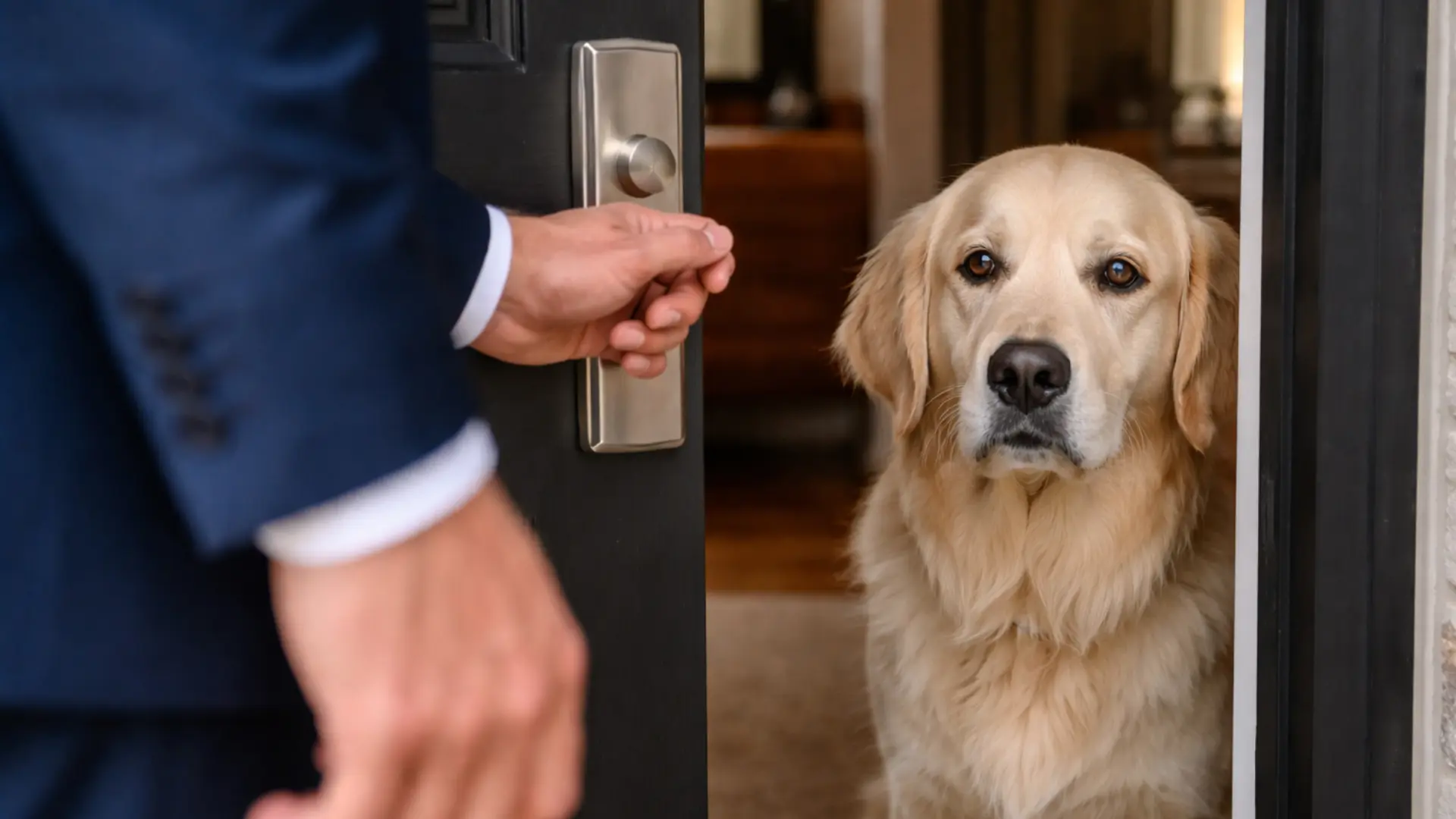
You’ve been invited to a wedding. Or maybe there’s a weekend getaway you’ve been dying to take. Three days—Friday night through Sunday.
And then it hits you: What about the dog?
You start doing the mental math:
🤔 Internal Monologue:
“I’ll leave Friday evening… be back Sunday night… that’s only 2-3 days, right?"
"My dog can hold it for 8 hours during work days, so… maybe?"
"People do this all the time… don’t they?”
Here’s the hard truth you need to hear:
No. You should NOT leave your dog home alone for 3 days. Not even close. And anyone who tells you otherwise is setting you up for a disaster—for both you AND your dog.
In this guide, I’m going to break down exactly why 3 days is too long, what can (and will) go wrong, and—most importantly—what you should do instead so you can enjoy your weekend away without guilt, anxiety, or coming home to a catastrophe.
No judgment. Just honest answers and real solutions.
🚨 Quick Answer (TL;DR)
Can you leave a dog alone for 3 days? Absolutely not. Even healthy adult dogs should never be left alone for more than 10-12 hours maximum. Three days (72 hours) without food, water changes, bathroom breaks, or human interaction is not only dangerous—it’s potentially life-threatening and illegal in many places. Dogs need bathroom breaks every 8-10 hours, fresh water multiple times daily, and meals at regular intervals.
Bottom line: If you’re going away for a weekend (or any trip longer than one work day), you MUST arrange care: pet sitter, dog boarding, trusted friend/family, or take your dog with you. There are no shortcuts.
Table of Contents
Why 3 Days Alone Is Dangerous (And Illegal)

Let’s start with the legal and ethical reality.
🚫 It’s Illegal in Many Places
Animal welfare laws in most U.S. states, Canada, UK, and EU countries explicitly prohibit leaving dogs without adequate care for extended periods.
What “adequate care” legally requires:
- Access to fresh water
- Regular feeding
- Bathroom breaks
- Shelter
- Medical attention if needed
- Freedom from distress
Leaving a dog alone for 72 hours violates ALL of these.
Legal consequences:
- Animal cruelty charges (misdemeanor or felony)
- Fines ($1,000-$10,000+)
- Jail time (in extreme cases)
- Loss of pet custody
- Criminal record
“Leaving a dog without food, water, or care for multiple days constitutes animal neglect under most state statutes. Even if the owner returns and the dog survives, they can still face criminal charges.” — ASPCA Legal Advocacy
💔 It’s Dangerous for Your Dog’s Health
What happens physiologically:
Hour 10-12: Bladder at maximum capacity (painful) Hour 12-16: Forced to urinate/defecate indoors (distressing) Hour 16-24: Dehydration begins (water bowl empty or stale) Hour 24-48: Hunger, anxiety escalating Hour 48-72: Severe dehydration, potential organ stress, extreme psychological distress
Serious risks include:
- Dehydration (can lead to kidney failure)
- Urinary tract infections (from holding bladder too long)
- Bloat (if they gorge on food you left out)
- Injury (panicked attempts to escape)
- Severe separation anxiety (long-term behavioral damage)
- Heatstroke (if home loses AC) or hypothermia (if heat fails)
😰 It’s Psychologically Traumatic
Dogs are social animals. Three days of total isolation is not just uncomfortable—it’s genuinely distressing.
What your dog experiences:
- Confusion (“Where did my family go?”)
- Anxiety (“Are they coming back?”)
- Fear (“I’m alone with no help”)
- Panic (“I need to escape”)
Long-term psychological effects:
- Development of separation anxiety
- Loss of trust
- Destructive behaviors
- Depression
This isn’t about being “dramatic”—this is documented animal behavior science.
Is it illegal to leave a dog alone for 2 days?
Legally, it depends on where you live — and I’m not your lawyer (and your dog definitely isn’t either). In a lot of places there isn’t a clean “48-hour rule” written down, but neglect laws usually come down to whether a dog had
constant access to fresh water, enough food, a safe temperature, hygiene, and a realistic way to go potty
. That’s why leaving a dog totally alone for two days can go from “bad idea” to possible neglect pretty fast. So even if it’s not explicitly illegal in your area, I still wouldn’t do it — honestly, it feels like it should be. If you must be away that long, book a sitter, ask a trusted friend, or use boarding. Your dog shouldn’t be running a solo survival challenge while you’re gone.
What Actually Happens When You Leave a Dog Alone for 3 Days
Let’s walk through the reality, hour by hour.
Friday, 6 PM: You Leave
Your dog: Confused but not immediately distressed. Expects you back soon.
Friday, 10 PM (4 hours)
Your dog: Starting to wonder where you are. Bladder getting full. Gets up, paces, lies back down.
Saturday, 2 AM (8 hours)
Your dog: Bladder at capacity. Holds it as long as possible because they’re trained not to go inside. Uncomfortable.
Saturday, 6 AM (12 hours)
Your dog: Can’t hold it anymore. Urinates indoors. Feels ashamed and stressed (dogs hate breaking house-training rules).
Water bowl might be empty or stale. Hungry (missed dinner and breakfast).
Saturday, 12 PM (18 hours)
Your dog: Extremely hungry. Dehydration starting if water is gone. Anxiety building. Pacing, whining, barking (if vocal). May urinate/defecate again.
Saturday, 6 PM (24 hours)
Your dog: Severe distress. Barking/howling constantly (neighbors may call authorities). Destructive behavior (scratching doors, chewing furniture). Multiple accidents throughout house.
Dehydration worsening. May drink from toilet if accessible.
Sunday, 12 PM (42 hours)
Your dog: Health declining. Lethargic from dehydration. Severe hunger. Soiled living space (sitting in own waste). Psychological trauma escalating.
May injure themselves trying to escape (broken teeth on crate bars, damaged paws from scratching doors).
Sunday, 6 PM (48 hours) - You Return
What you come home to:
- Urine and feces throughout the house
- Destroyed furniture, scratched doors, chewed belongings
- Dehydrated, distressed, possibly injured dog
- Potential visits from animal control (if neighbors reported)
Your dog’s reaction:
- Frantic, desperate greeting OR
- Withdrawn, depressed, won’t make eye contact (trust damaged)
⚠️ “But I Left Out Extra Food and Water!”
This doesn’t solve the core problems:
- Bathroom: Your dog still can’t hold their bladder for 72 hours
- Water: Dogs knock over bowls, water gets dirty, or they may gorge and vomit
- Food: Dogs may overeat (causing bloat) or ration anxiety may cause them not to eat
- Emergencies: If your dog gets injured, chokes, or has medical issue, NO ONE is there to help
- Isolation: Psychological distress from 3 days alone is traumatic regardless of food/water
Leaving extra food and water is NOT the same as proper care. It’s the bare minimum survival setup—and even that often fails.
How Long CAN You Leave a Dog Alone? (The Real Limits)

So if 3 days is out of the question, what’s the actual safe limit?
✅ The Maximum Safe Limit: 8-10 Hours (One Work Day)
For healthy adult dogs (1-7 years):
- Maximum alone time: 8-10 hours
- Ideal: 6-8 hours
- Requires: Morning exercise, enrichment toys, safe space
This is the equivalent of a standard work day—NOT a multi-day trip.
For more details on making 8-hour alone time work, see our complete guide: Can I Leave My Dog Alone for 8 Hours? The Full-Time Worker’s Guide
⚠️ Shorter Limits for Puppies and Seniors
Puppies (under 1 year):
- 8-12 weeks: 1-2 hours MAX
- 3-6 months: 2-4 hours MAX
- 6-12 months: 4-6 hours MAX
Senior dogs (7+ years):
- 6-8 hours MAX (may need more frequent bathroom breaks)
Dogs with medical conditions:
- Consult your vet (diabetes, kidney issues, etc. may require more frequent care)
🚫 Beyond 10-12 Hours? You MUST Arrange Care
If you’ll be gone longer than 10-12 hours, you need:
- Pet sitter
- Dog boarding
- Trusted friend/family
- OR take dog with you
There are no exceptions. This isn’t about being overprotective—it’s basic animal welfare.
Your REAL Options for Weekend Trips
So you need to go away for 3 days. What do you actually do? Here are your legitimate options.
Solution #1: Professional Pet Sitter (Best Option)
What it is: A professional comes to your home 2-4 times daily to care for your dog while you’re gone.
How It Works
Typical schedule for 3-day weekend:
- Friday evening: Feed dinner, potty break, playtime (30-60 min)
- Saturday morning: Breakfast, long walk/play session (45-60 min)
- Saturday evening: Dinner, potty, playtime (30-60 min)
- Sunday morning: Breakfast, walk (45-60 min)
- Sunday evening: Dinner, wait for your return OR final visit
Some sitters offer overnight stays (sleep at your house)—even better!
Pros
✅ Dog stays in comfortable, familiar environment ✅ Maintains normal routine ✅ One-on-one attention ✅ Personalized care ✅ Home security (someone checking on your house) ✅ Can administer medication if needed ✅ Less stressful than boarding for anxious dogs
Cons
❌ More expensive than boarding ($25-75+ per visit, $75-150+ for overnight) ❌ Stranger in your home (requires trust) ❌ Dog still alone between visits (but only 8-12 hours, which is safe) ❌ Need to find reliable, insured professional
Cost Estimate
For 3-day weekend (Friday-Sunday):
- Drop-in visits (2x/day): $300-450 total
- Drop-in visits (3x/day): $450-675 total
- Overnight stay (3 nights): $225-450 total
How to Find a Good Pet Sitter
Best platforms:
- Rover.com (largest network, reviews, insurance)
- Care.com (background checks available)
- Local Facebook groups (community recommendations)
- Nextdoor (neighbor recommendations)
What to look for:
- Reviews from multiple clients
- Experience with your dog’s breed/size
- Insured and bonded
- Clear communication
- Meet-and-greet before trip (see if dog likes them)
- Emergency protocol
Red flags:
- No reviews or references
- Won’t do meet-and-greet
- Vague about experience
- No emergency contact info
- Significantly cheaper than average (too good to be true)
Solution #2: Dog Boarding/Kennel
What it is: Your dog stays at a facility with other dogs, supervised 24/7 by staff.
Types of Boarding
Traditional kennel:
- Dogs in individual kennels/runs
- Structured potty/play times
- Budget-friendly option
Luxury dog hotel:
- Private suites, cameras, play groups
- Spa services, training sessions
- Higher cost
Cage-free boarding:
- Dogs roam freely in groups
- Home-like environment
- Social dogs only
Pros
✅ 24/7 supervision ✅ Social interaction (if dog is social) ✅ Structured schedule ✅ Usually less expensive than sitters ✅ Often have vet on call ✅ Exercise and play included
Cons
❌ Stressful for anxious or shy dogs ❌ Exposure to illness (kennel cough, parasites) ❌ Less one-on-one attention ❌ Dog is out of normal environment ❌ Quality varies WIDELY by facility
Cost Estimate
For 3-day weekend (2-3 nights):
- Budget kennel: $50-100 total ($25-35/night)
- Mid-range: $100-180 total ($35-60/night)
- Luxury: $180-450+ total ($60-150+/night)
How to Choose a Good Boarding Facility
Visit in person BEFORE booking. Look for:
✅ Clean, well-maintained facility ✅ Friendly, knowledgeable staff ✅ Proof of vaccinations required for all dogs ✅ Adequate space (not overcrowded) ✅ Climate control ✅ Clear emergency protocols ✅ Cameras available for owners ✅ Separate areas for different dog sizes/temperaments
Red flags:
❌ Won’t let you tour facility ❌ Dirty or smells strongly of urine ❌ Aggressive dogs mixed with fearful dogs ❌ Staff seem overwhelmed or dismissive ❌ No vaccination requirements ❌ No clear emergency vet plan
Solution #3: Trusted Friend or Family Member
What it is: Someone you know personally takes care of your dog (either at your home or theirs).
How to Make This Work
Clear expectations:
- Write down your dog’s schedule (feeding times, walk routine, medications)
- Leave emergency contact info (your number, vet number)
- Provide all supplies (food, leash, treats, medications)
- Show them where everything is
Fair compensation:
- Pay them! Even if they say it’s free, offer gas money or a thank-you gift
- $20-50/day is reasonable for a friend
- Or reciprocate (you’ll watch their dog next time)
Pros
✅ Free or low-cost ✅ Trust factor (you know them) ✅ Personal attention ✅ Flexible arrangements
Cons
❌ Depends on their availability ❌ May not have pet care experience ❌ Awkward if something goes wrong ❌ You “owe” them a favor
Best for: Dogs who already know and like this person, when budget is tight
Solution #4: Take Your Dog With You
What it is: Your dog comes on the trip!
When This Works
Dog-friendly destinations:
- Road trips (many hotels now accept dogs)
- Camping
- Beach vacations
- Visiting dog-loving friends/family
- Outdoor adventures
Requirements:
- Dog is car-trained
- Dog is well-behaved in public
- Destination allows dogs
- You’re willing to plan around dog’s needs
Pros
✅ No separation anxiety ✅ No pet care costs ✅ Quality bonding time ✅ Peace of mind (dog is with you)
Cons
❌ Limits your activities (can’t go to restaurants, attractions that don’t allow dogs) ❌ Extra planning required ❌ Potential hotel pet fees ($25-100/night) ❌ Not possible for all destinations (weddings, flights, etc.)
Resources:
- BringFido.com (dog-friendly hotels, restaurants)
- GoPetFriendly.com (travel guides)
- Airbnb (filter for “pets allowed”)
Pro tip: For air travel, check out our guide on How Long Can Dogs Hold Their Bladder on Flights
How to Prepare Your Dog for Your Weekend Away
Once you’ve arranged care, here’s how to set your dog up for success:
📝 Step 1: Create a Care Sheet
Include:
- Feeding schedule (times, portions, brand of food)
- Medication (if any) with instructions
- Vet contact info + emergency vet
- Your contact info
- Behavioral notes (“doesn’t like strangers,” “scared of thunder,” etc.)
- Location of supplies (food, leash, first aid kit)
Template:
DOG'S NAME: Max
FEEDING: 7 AM & 6 PM, 1.5 cups kibble each meal (Purina Pro Plan, in pantry)
MEDICATIONS: None
VET: Dr. Smith, Happy Paws Vet, (555) 123-4567
EMERGENCY VET: 24-Hour Animal Hospital, (555) 987-6543
MY NUMBER: (555) 111-2222
NOTES: Loves fetch but gets tired quickly. Scared of loud noises. Sleeps in crate at night (door open).
🧸 Step 2: Prep Supplies
Gather everything in one place:
- Food (enough for entire trip + extra)
- Treats
- Medications
- Leash, collar, harness
- Waste bags
- Favorite toys
- Comfort items (blanket, bed)
- First aid kit
🐕 Step 3: Do a Trial Run
Before your trip:
- Have the sitter/friend meet your dog
- Do a practice visit (let them feed/walk your dog while you’re still home)
- See how your dog reacts
- Adjust if needed
🏠 Step 4: Prep Your Home (If Sitter Is Coming)
- Puppy-proof (remove hazards)
- Set up dog’s space (bed, water, toys)
- Leave lights on timers (normalcy)
- Consider leaving TV/radio on (background noise)
- Lock away anything valuable or dangerous
📹 Step 5: Set Up Communication
- Ask sitter to send daily updates (photo/text)
- Set up pet camera (Furbo, Wyze) if you want live check-ins
- Make yourself available for questions
Red Flags: Signs of Bad Pet Care Advice
Be VERY cautious of anyone who tells you:
🚩 “Dogs are fine alone for 3-4 days if you leave food and water” — FALSE and dangerous
🚩 “Just leave your dog in the yard with a doghouse” — Still neglect; they need care
🚩 “Dogs can hold their bladder for days if needed” — Medically false and harmful
🚩 “Your dog will be fine, stop worrying” — Dismissive of real welfare concerns
If someone suggests leaving your dog alone for multiple days, they are giving you bad advice. Period.
📚 Additional Resource
For more context on what experts recommend, this article from Happy, Healthy, Confident Trained Dogs discusses general guidelines for leaving dogs home alone during weekend trips:
Leaving Your Dog Home Alone: Going Away for the Weekend
The consensus among experts is clear: proper care arrangements are non-negotiable for multi-day absences.
FAQ: Weekend Dog Care Questions Answered
Can I leave my dog alone for 48 hours (2 days)?
No. The same issues apply—bladder capacity, food/water management, psychological distress, and safety concerns. Maximum safe alone time is 8-10 hours (one work day). Anything beyond that requires care arrangements.
What if I leave my dog in a crate for the weekend?
Absolutely not. Leaving a dog crated for 72 hours (or even 24 hours) is cruel, dangerous, and illegal. Dogs cannot hold their bladder that long, and crate confinement for extended periods causes severe physical and psychological harm.
Can I leave my dog alone overnight (one night)?
Only if someone can check on them. If you leave Friday evening and return Saturday afternoon (12-18 hours), this is borderline but manageable for healthy adult dogs IF:
- They have food, fresh water
- They have a safe space
- Your home is climate-controlled
- No medical issues
Still risky. Better to have a friend check in Saturday morning.
How much does pet care cost for a weekend?
Estimated costs for 3-day weekend:
- Pet sitter (drop-in visits): $300-675
- Overnight pet sitter: $225-450
- Dog boarding: $50-450 (depends on facility)
- Friend/family: $0-150 (offer compensation)
- Taking dog with you: $0-300 (hotel pet fees)
Budget accordingly. Pet care is part of responsible dog ownership.
What if I can’t afford pet care?
Options:
- Barter: Offer to dog-sit for a friend in exchange
- Take your dog with you (if possible)
- Cancel or shorten trip (harsh but sometimes necessary)
- Ask family/friends (offer compensation you CAN afford)
What NOT to do: Leave your dog alone for days to save money. This is not a valid trade-off.
Can my dog stay in the backyard for the weekend?
No. Outdoor-only dogs still need:
- Fresh water multiple times daily (bowls get dirty/knocked over)
- Food
- Shelter from weather
- Supervision (injuries, escape, theft)
- Social interaction
Leaving a dog in the yard for 3 days is still neglect.
What if there’s an emergency and I have NO options?
If you genuinely have zero options (rare):
- Contact local animal shelters—some offer emergency boarding
- Call your vet—they may have boarding or referrals
- Post in community groups (Nextdoor, Facebook) for emergency help
- Contact breed-specific rescues (they sometimes help in crisis)
Last resort: Temporary boarding at a kennel, even if not ideal, is better than leaving dog alone.
My neighbor said they leave their dog alone for weekends all the time. Why are you saying it’s wrong?
Just because someone does it doesn’t make it right or safe.
Many dogs survive being left alone for days—but “survival” isn’t the standard. Many also:
- Suffer in silence
- Develop behavioral issues
- Experience health problems
- Live in constant stress
Would you leave a toddler alone for 3 days? Of course not. Dogs have similar dependency and needs.
The Bottom Line: Never Leave Your Dog Alone for 3 Days
I know this article might feel harsh. But here’s the reality:
Dog ownership means planning your life around your dog’s needs—not the other way around.
Weekend trips are absolutely possible. Vacations are absolutely possible. But they require arranging proper care. There’s no hack, no shortcut, no “just this once” exception.
If you can afford a weekend trip, you can afford a pet sitter. If you can’t afford a pet sitter, you can’t afford the trip. That’s the truth. 🐾
Your dog depends on you completely. Honor that trust. Arrange care. Enjoy your weekend guilt-free knowing your best friend is safe, happy, and cared for.
Ready to Plan Your Trip Responsibly?
Next steps:
- Book care FIRST, then finalize travel plans
- Research options:
- Search Rover.com or Care.com for local sitters
- Tour local boarding facilities
- Ask friends/family about availability
- Do a trial run before your trip
- Create your care sheet with all necessary info
- Set up communication (pet camera, daily check-ins)
Additional reading:
- Can I Leave My Dog Alone for 8 Hours? Full-Time Worker’s Guide
- How Long Can Dogs Hold Their Bladder on Flights?
- Dog Separation Anxiety: Signs & Solutions
Your dog trusts you completely. Make choices that honor that trust. ❤️🐕
Written by Alex | January 3, 2026 | DogCityGuide.com