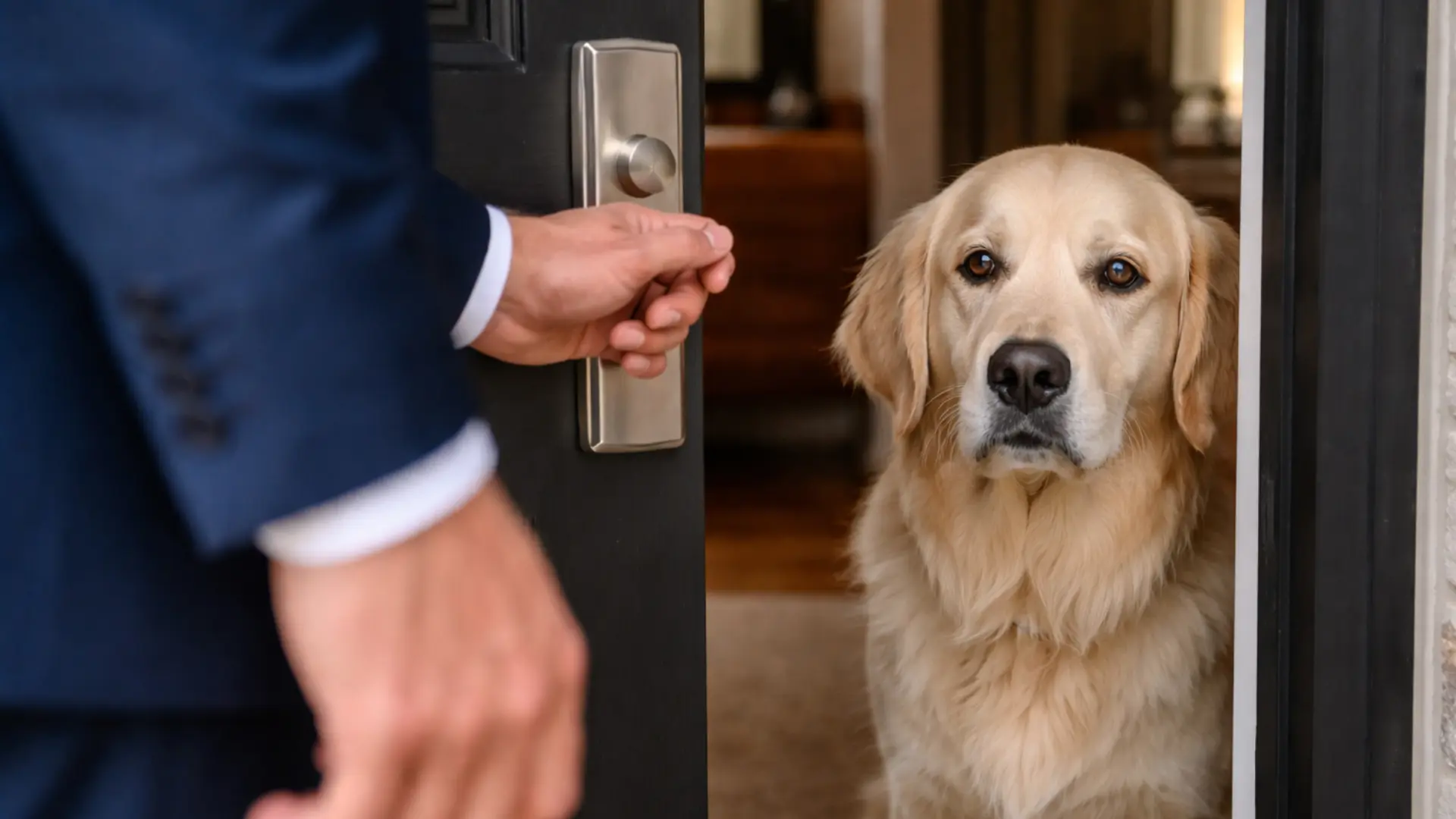
It was a beautiful 85°F summer day. Perfect weather, I thought, as I grabbed my dog’s leash for our afternoon walk.
Three blocks later, my dog suddenly stopped walking. He lifted his paw. Then another. He started limping.
I looked down at the asphalt. Then I touched it.
It was scorching. Burning hot. Easily 140°F+.
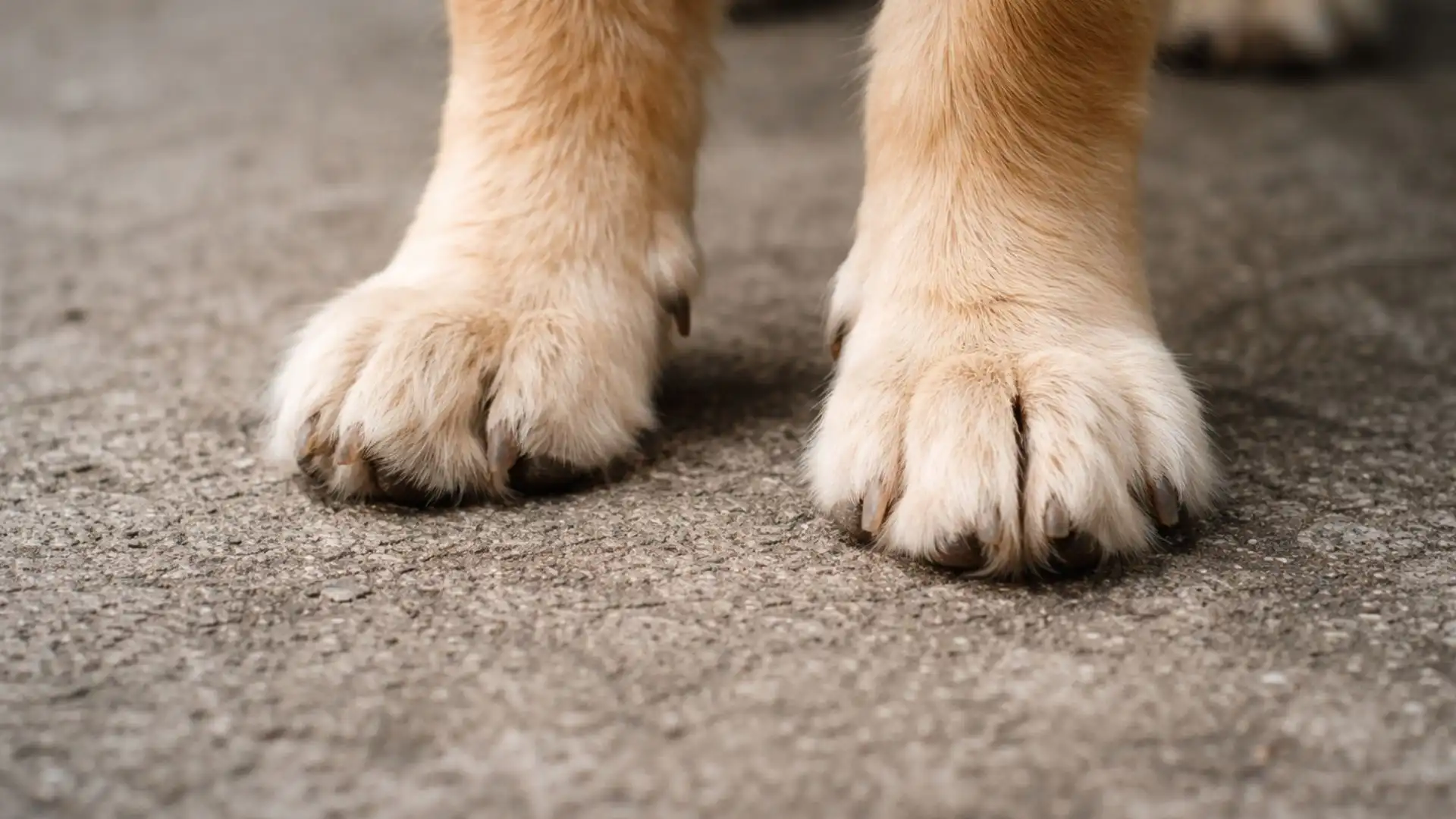
My dog’s paw pads were blistered. Red. Painful. All because I didn’t know about the 7-second rule.
I rushed him to the vet. The burns took weeks to heal. And the guilt? That lasted even longer.
If you take your dog on walks during warm weather, you NEED to know the 7-second rule. It takes 5 seconds to test. It could save your dog from agonizing burns.
Here’s everything you need to know to protect your dog’s paws from hot pavement—starting right now.
🚨 Quick Answer: What Is the 7-Second Rule?
The 7-second rule for dogs is a simple hand test to check if pavement is too hot for your dog’s paws: Place the back of your bare hand flat on the ground for 7 seconds. If it’s too hot for your hand, it’s too hot for your dog’s paw pads and will cause burns. This test works for asphalt, concrete, sidewalks, sand, and artificial turf.
Key fact: When air temperature is 77°F, asphalt can reach 125°F—hot enough to fry an egg and burn paw pads in 60 seconds.
What Is the 7-Second Rule for Dogs?
The 7-second rule is a safety test that determines whether surfaces are too hot for your dog to walk on safely.
How It Works:
Step 1: Find the surface you plan to walk on (asphalt, concrete, sidewalk, sand) Step 2: Place the back of your bare hand flat on the surface Step 3: Hold it there for 7 full seconds Step 4: Evaluate:
- ✅ Can hold comfortably = Safe to walk
- ❌ Too hot to keep your hand there = TOO HOT for dog paws
That’s it. Simple, fast, and effective.
Why the BACK of Your Hand?
Important: Use the back of your hand, not your palm.
Why?
- Palm skin is thicker and more calloused (less sensitive)
- Back-of-hand skin is thinner and more sensitive
- This mimics your dog’s paw pad sensitivity more accurately
The back of your hand will feel heat closer to how your dog’s paws feel it.
The Shocking Truth: How Hot Pavement Really Gets
Most people drastically underestimate how hot surfaces get in summer.
Here’s the reality:
| Air Temperature | Asphalt Temperature | Time to Burn Paws | Safety Level |
|---|---|---|---|
| 77°F (25°C) | 125°F (52°C) | 60 seconds | ⚠️ Caution |
| 86°F (30°C) | 135°F (57°C) | 45 seconds | ❌ Unsafe |
| 87°F (31°C) | 143°F (62°C) | 30 seconds | ❌ Dangerous |
| 95°F (35°C) | 155°F (68°C) | 15 seconds | 🔥 Extreme |
| 100°F (38°C) | 160°F+ (71°C+) | 5-10 seconds | 🔥 SEVERE |
Source: Data from veterinary studies and thermometer testing by animal welfare organizations
The Numbers That Should Scare You:
- At 77°F air temp, asphalt reaches 125°F (hot enough to fry an egg)
- At 86°F air temp, asphalt reaches 135°F (painful burns in under 1 minute)
- At 95°F air temp, asphalt reaches 155°F (severe burns in 15 seconds)
Translation: Even on a “nice” 80°F day, the pavement can burn your dog’s paws.
Why Dark Surfaces Get SO Much Hotter
The air temperature is NOT the ground temperature.
Why Surfaces Absorb Heat:
Dark surfaces (asphalt, black pavement, dark concrete) absorb and retain heat from the sun.
Physics:
- Albedo effect - Dark colors absorb more sunlight
- Thermal mass - Pavement stores heat for hours
- Radiation - Surfaces release heat slowly even after sun sets
Real example:
- Air temperature: 85°F (feels comfortable!)
- Asphalt temperature: 140°F (instant burns)
This is why you can’t judge safety by air temperature alone.
Signs Your Dog’s Paws Are Burned
How to tell if your dog has paw pad burns:
🚨 Immediate Signs (During Walk):
- Limping or favoring a paw
- Stopping suddenly and refusing to walk
- Lifting paws repeatedly (hopping, dancing)
- Licking or biting at paws
- Whining or yelping
- Refusing to walk on certain surfaces
- Trying to walk on grass edges instead of pavement
🩹 Visible Burn Signs (After Walk):
- Red, inflamed paw pads
- Blisters or peeling skin
- Darkened or discolored paw pads
- Raw, exposed skin
- Bleeding from paw pads
- Excessive licking of paws
- Limping that continues indoors
If You See These Signs
Stop walking immediately. Carry your dog to grass or shade if possible. Get home and examine paws. If you see blisters, bleeding, or severe redness, call your vet.
First aid: Rinse paws with cool (not ice cold) water. Do NOT apply ice directly. Do NOT let dog lick burns. See vet if severe.
How to Protect Your Dog’s Paws from Hot Pavement
Solution #1: Walk During Safe Hours
Best times to walk in summer:
✅ Early morning (before 8 AM) - Ground hasn’t heated up yet ✅ Late evening (after 8 PM) - Ground has cooled down ❌ Avoid: 10 AM - 6 PM (peak heat hours)
Why it works: Surfaces need time to heat up and cool down. Even on a 90°F day, morning pavement might only be 80°F.
Solution #2: Walk on Grass/Dirt/Shade
Safe surfaces: ✅ Grass (stays cool, doesn’t absorb heat like pavement) ✅ Dirt paths ✅ Shaded sidewalks ✅ Gravel (cooler than asphalt but still check) ❌ Avoid: Asphalt, concrete, metal surfaces, sand, artificial turf
Strategy: Cross streets quickly on paws, walk on grass whenever possible.
Solution #3: Dog Booties/Paw Protection
Physical barriers work:
Dog Booties:
- Protect from heat, sharp objects, salt
- Best for dogs who tolerate them
- Takes time for dogs to adjust
Paw Balms/Waxes:
- Create protective barrier
- Apply before walks
- Examples: Musher’s Secret, Paw Soother
- Helps but not foolproof
Limitations: Some dogs hate booties and refuse to walk. Start training early if you want to use them.
Solution #4: Hose Down Pavement
Quick fix if you MUST walk midday:
- Spray down pavement/driveway with hose
- Creates temporary cooling (5-10 minutes)
- Better than nothing but not ideal
- Still do the 7-second test after
Solution #5: Drive to Shaded/Grassy Areas
Can’t walk early/late?
- Drive to a park with grass
- Find shaded trails
- Visit dog parks with turf/grass
- Beach areas (but beware: sand gets HOT too!)
The 7-Second Rule: Step-by-Step Tutorial
Let me walk you through exactly how to do this test.
Step 1: Choose Your Surface
Walk to the exact surface you plan to walk your dog on.
Don’t test:
- Shaded areas (then walk in sun) ❌
- Grass (then walk on pavement) ❌
- Morning temps (then walk at noon) ❌
Do test:
- The actual route you’ll take ✅
- In direct sunlight ✅
- At the time you plan to walk ✅
Step 2: Bare Your Hand
Remove gloves, sleeves, anything covering your hand.
Why? You need direct skin contact to feel the true temperature.
Step 3: Place Back of Hand Down
Press the BACK of your hand flat against the surface.
Not:
- Palm (too thick)
- Fingertips (too small)
- Quick tap (not accurate)
But:
- Entire back of hand
- Firm, flat contact
- Full skin-to-surface connection
Step 4: Count to 7
Hold it there and count slowly:
“One Mississippi, two Mississippi, three Mississippi…”
Full 7 seconds. Don’t cheat.
Step 5: Evaluate
Ask yourself:
❓ “Is this uncomfortably hot?” ❓ “Do I want to pull my hand away?” ❓ “Would I want to stand here barefoot for 30 minutes?”
If the answer is “NO” or “uncomfortable” → TOO HOT for your dog.
Step 6: Make Your Decision
If it passes: ✅ Safe to walk (but still watch your dog for signs of discomfort)
If it fails: ❌ Choose a different option:
- Walk on grass only
- Wait for cooler hours
- Use dog booties
- Skip the walk entirely
Different Surfaces: How They Compare
Not all surfaces heat equally. Here’s the breakdown:
🔥 HOTTEST Surfaces (Avoid in Summer)
- Asphalt/Blacktop - Gets hottest, stays hot longest
- Dark concrete - Almost as bad as asphalt
- Sand - Scorching hot at beaches, deserts
- Metal surfaces (manhole covers, grates) - Extreme heat
- Artificial turf - Can reach 200°F+ (yes, really)
⚠️ MODERATE Surfaces (Use Caution)
- Light-colored concrete - Cooler than dark, but still hot
- Bricks/pavers - Depends on color and sun exposure
- Gravel - Better than asphalt but check first
✅ SAFEST Surfaces
- Natural grass - Stays coolest
- Dirt paths - Good alternative
- Mulch/wood chips - Relatively cool
- Shaded pavement - Significantly cooler than sunny areas
Special Cases: When the 7-Second Rule Isn’t Enough
🏖️ Beach Sand
Sand can reach 150°F+ on hot days - hot enough to cause severe burns in seconds.
The 7-second test works, BUT:
- Wet sand near water is cooler (safer)
- Dry sand in direct sun is extremely hot
- Test frequently as you move around
Best practice: Walk dogs at water’s edge on wet sand, early morning or evening only.
🏙️ Artificial Turf
Warning: Artificial turf can reach 200°F - much hotter than asphalt.
Why it’s dangerous:
- Designed to absorb heat (for sports)
- No evaporative cooling like real grass
- Looks “safe” but can cause immediate severe burns
Always test artificial turf. Many dog parks use it, but it can be a burn hazard.
🌨️ Winter Surfaces + Salt
The 7-second rule works in REVERSE for winter:
- Ice and snow can cause frostbite
- Salt/ice melt chemicals burn paw pads chemically
- Test for extreme cold the same way (too cold for hand = too cold for paws)
Real Stories: Why This Matters
🐾 Story #1: The Emergency Vet Visit
“I took my Lab for a walk on a ‘nice’ 82°F day. Didn’t think twice. Halfway through the walk, she started limping. By the time we got home, her pads were blistered. $300 emergency vet bill. She couldn’t walk for a week. Now I ALWAYS do the hand test.” — Sarah M., Arizona
🐾 Story #2: The Artificial Turf Mistake
“Our dog park has artificial turf. I thought it would be safer than pavement. It was 88°F out. I let my dog run on it for 5 minutes. He came limping to me with bleeding paw pads. The turf was over 160°F. I had no idea artificial turf got that hot. Please, please test it first.” — Marcus T., Texas
🐾 Story #3: The Quick Errand That Went Wrong
“I just needed to run into the store for 2 minutes. I left my dog in the parking lot with my partner. It was noon, 90°F. She stood on the asphalt waiting. When I came out, she was holding up all her paws and crying. All four pads were burned. I’ll never forgive myself.” — Jennifer K., California
Frequently Asked Questions
How accurate is the 7-second rule?
Very accurate for detecting dangerous heat. The back of your hand has similar heat sensitivity to dog paw pads. If it’s painful for your hand after 7 seconds, it will burn your dog’s paws. However, some dogs with very sensitive paws (puppies, seniors, certain breeds) may be uncomfortable even if you can tolerate it. When in doubt, err on the side of caution.
Can I use the 7-second rule on my palm instead?
No—use the BACK of your hand. Your palm skin is much thicker and more calloused than the back of your hand or your dog’s paw pads. Testing with your palm will give you a false sense of safety. Many people can hold their palm on hot surfaces longer than dogs can stand on them.
What if my dog has thick/tough paw pads?
Even thick paw pads can burn. While some dogs (working breeds, outdoor dogs) have tougher pads, they’re still vulnerable to extreme heat. Burns can happen to any dog when surfaces exceed 120°F+. Always test, regardless of your dog’s paw thickness.
At what temperature is it too hot to walk my dog?
General guideline: If air temperature exceeds 80°F (27°C), test pavement before walking. Above 85°F, most pavement will be too hot during midday hours. Above 90°F, pavement is almost certainly unsafe from 10 AM - 6 PM. Always test with the 7-second rule—don’t rely on air temperature alone.
Can puppies’ paws handle heat better or worse than adult dogs?
Worse. Puppy paw pads are softer, thinner, and more sensitive than adult pads. They burn faster and more severely. Extra caution needed for puppies under 1 year old. Consider carrying them over hot surfaces or avoiding midday walks entirely.
Do certain dog breeds have more heat-sensitive paws?
Yes. Breeds with less outdoor exposure or bred for cold climates tend to have more sensitive paws:
- More sensitive: Huskies, Malamutes, Arctic breeds, indoor/small breeds
- Tougher pads: Working breeds, hunting dogs, outdoor ranch dogs
But all dogs can burn. Don’t skip the test based on breed.
How long do paw pad burns take to heal?
Mild burns: 3-7 days Moderate burns: 1-2 weeks Severe burns: 2-4 weeks, may need vet care
Complications: Infection, permanent scarring, sensitivity. Prevention is always better than treatment.
What should I do if my dog’s paws get burned?
Immediate steps:
- Stop walking - Carry dog to cool surface if possible
- Cool the paws - Rinse with cool (not ice cold) water for 5-10 minutes
- Examine paws - Look for redness, blisters, bleeding
- Prevent licking - Use cone/booties to keep dog from licking burns
- Call vet - If severe (blisters, bleeding, deep burns)
Do NOT:
- Apply ice directly (can cause frostbite damage)
- Use human burn creams (some are toxic to dogs)
- Let dog lick burns (causes infection)
Does wetting my dog’s paws before walking help?
Short-term only. Wet paws cool slightly but dry within minutes on hot pavement. This is NOT a substitute for the 7-second rule. The water evaporates quickly and won’t protect from burns. Use proper solutions: timing, grass, or booties.
Can I condition my dog’s paws to tolerate heat?
No—and attempting this is dangerous. While paw pads can toughen over time with regular outdoor exposure on various surfaces, you CANNOT “train” paws to withstand extreme heat. Burns happen regardless of conditioning when temps exceed safe limits. Never intentionally expose dogs to hot surfaces to “toughen them up.”
The Bottom Line: Make the 7-Second Rule a Habit
Here’s what I wish someone had told me before my dog got burned:
It only takes 5 seconds to test the ground. But it can prevent weeks of pain, hundreds in vet bills, and permanent damage to your dog’s paws.
You don’t need fancy equipment. You don’t need a thermometer. You just need your hand and 7 seconds.
Make it a habit. Every walk. Every summer day. Back of your hand, 7 seconds. If it’s too hot for you, it’s too hot for them. Simple as that. 🐾🔥
Quick Reference: Safe Walking Checklist
✓ Before Every Summer Walk:
- □Check air temperature (above 77°F? Extra caution needed)
- □Do the 7-second hand test on pavement
- □If too hot: choose grass route OR reschedule walk
- □Bring water for your dog
- □Watch dog’s behavior (limping = stop immediately)
✓ Safe Walking Times:
- □Early morning (before 8 AM) ✅
- □Late evening (after 8 PM) ✅
- □AVOID: 10 AM - 6 PM (peak heat) ❌
Your dog trusts you to keep them safe. Don’t let them down. Start using the 7-second rule today. 🐾
🐾 Share This to Save Dogs’ Paws 🐾
Help other dog owners learn the 7-second rule before their dogs get burned.
Related Articles:
- Can I Leave My Dog Alone for 8 Hours?
- How to Keep Your Dog Safe During Fireworks
- Best Dog Cooling Mats for Summer
- Dog Health: Warning Signs Your Dog Needs a Vet
- How to Bathe Your Dog at Home Safely
Medical Disclaimer: This article is for informational purposes only and does not replace professional veterinary advice. If your dog has burned paws or shows signs of heat injury, contact your veterinarian immediately.
Sources:
- American Kennel Club (AKC) - Paw Pad Burn Prevention
- American Veterinary Medical Association (AVMA) - Hot Weather Safety
- Moon Valley Canine Training - Asphalt Temperature Studies
- Veterinary Emergency Group - Paw Pad Burn Treatment
Written by Alex | January 1, 2026 | DogCityGuide.com