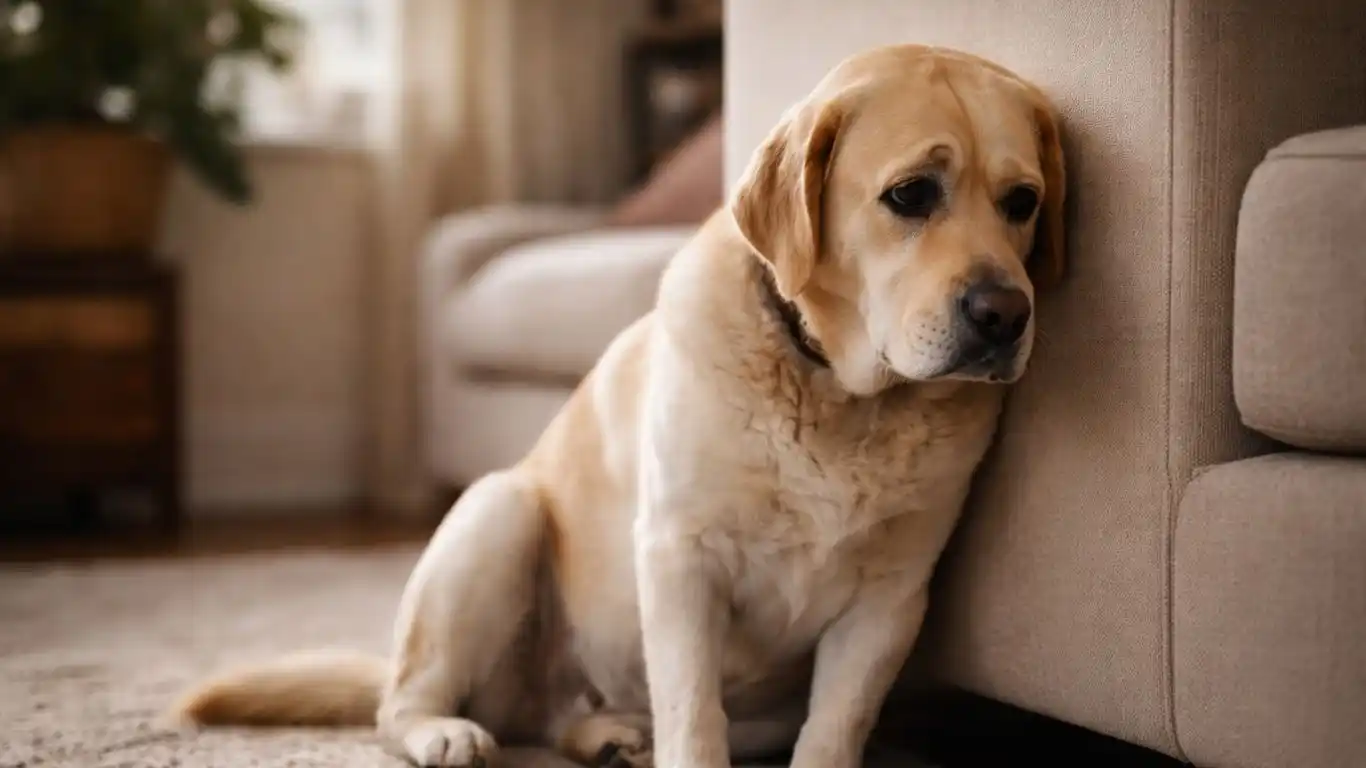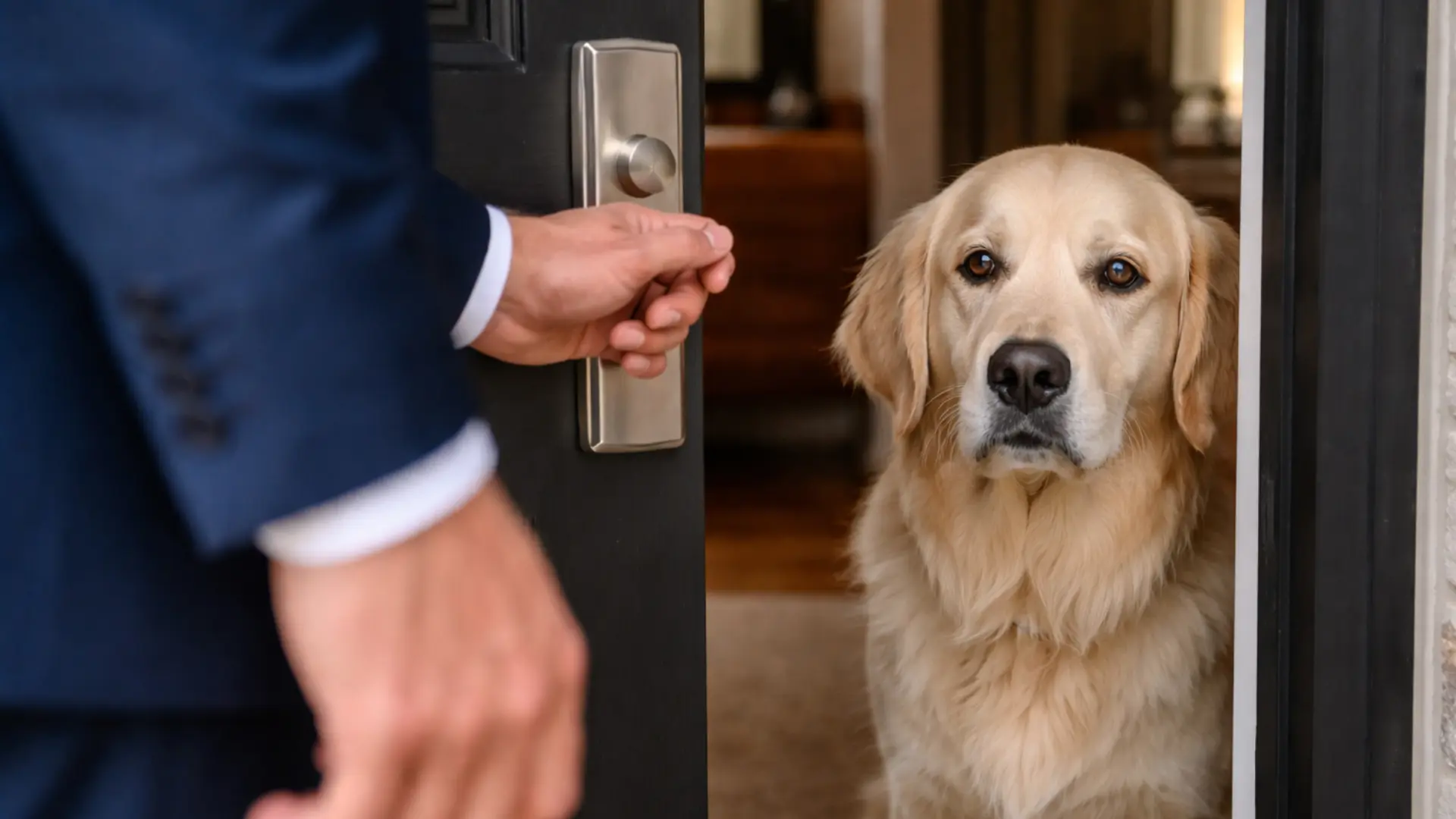
It’s 7:45 AM. You’re about to leave for work. Your dog is looking at you with those eyes—the ones that make you feel like the worst person alive.
You’ll be gone for 8 hours. Maybe 9 with commute.
And the guilt is eating you alive.
“Am I a bad dog owner for leaving them this long?” “Will they be okay?” “Should I have even gotten a dog if I work full-time?”
If you’ve ever felt this way, you’re not alone. Millions of dog owners work standard 9-5 jobs and face this exact question every single day.
Here’s what I’m going to tell you—and it might not be what you expect:
Yes, most adult dogs can be left alone for 8 hours. But there’s a big difference between “can handle it” and “thrives in that situation.” And the answer depends heavily on your dog’s age, breed, temperament, and how you set them up for success.
In this guide, I’m breaking down the honest truth about leaving dogs alone for work—including when it’s fine, when it’s not, and exactly what you need to do to make sure your dog is happy, healthy, and not destroying your apartment while you’re gone.
No guilt. No judgment. Just real solutions for real people with real jobs.
🎯 Quick Answer (TL;DR)
Can you leave a dog alone for 8 hours? Most healthy adult dogs (1-7 years old) can physically handle 8 hours alone if properly trained and exercised. However, puppies under 6 months should not be alone for more than 2-4 hours, and senior dogs may need midday breaks. High-energy breeds (Huskies, Border Collies) struggle more than low-energy breeds (Bulldogs, Basset Hounds). Success depends on: morning exercise, mental enrichment (puzzle toys), proper training, and sometimes midday help (dog walker or daycare).
Bottom line: It’s not ideal, but it’s manageable for most adult dogs with the right setup. If your dog shows signs of severe separation anxiety, destructive behavior, or depression, 8 hours alone is too long without intervention.
The Honest Truth: Can Dogs Actually Handle 8 Hours Alone?
Let’s start with the science, then we’ll get to the practical reality.
What Veterinarians and Behaviorists Say
The consensus from experts:
- Adult dogs (1-7 years) can physically be alone for 8-10 hours
- Their bladder capacity supports this (most can hold it for 8-10 hours)
- Their sleep patterns mean they’ll sleep most of the day anyway (12-14 hours for adult dogs)
“A healthy adult dog can absolutely be left alone for a standard work day. The question isn’t whether they can do it—it’s whether they’re mentally and physically prepared, and whether they have adequate enrichment.” — Dr. Sophia Yin, Veterinarian and Animal Behaviorist
The Difference Between “Can” and “Should”
Here’s where it gets nuanced:
Can your dog physically survive 8 hours alone? Yes, almost certainly.
Will your dog be happy, fulfilled, and not anxious during those 8 hours? That depends on:
- Age - Puppies cannot. Adult dogs can. Seniors may struggle.
- Breed - High-energy breeds need more stimulation
- Training - Is your dog comfortable being alone?
- Exercise - Did they get a good walk before you left?
- Mental enrichment - Do they have puzzle toys, not just a empty room?
- Temperament - Some dogs are naturally independent; others are Velcro dogs
The reality most vets won’t tell you directly: Millions of dogs are home alone 8 hours a day, 5 days a week. Most do fine. Some struggle. A few shouldn’t be left alone that long at all.
How Long Dogs Can Be Alone: By Age (Chart)
Age is the #1 factor. Here’s the breakdown:
| Dog Age | Maximum Alone Time | Why | Solution for 8-Hour Work Day |
|---|---|---|---|
| Puppy (8-12 weeks) | 1-2 hours MAX | Tiny bladder, need potty every 1-2 hours; socialization critical | ❌ Don’t work full-time without help. Need puppy daycare or midday sitter. |
| Puppy (3-6 months) | 2-4 hours MAX | Bladder improving but still small; separation anxiety risk; chewing phase | ⚠️ Need midday break (dog walker or neighbor). Crate training essential. |
| Young Adult (6-12 months) | 4-6 hours | Bladder maturing; still high energy; training solidifying | ⚠️ Doable with morning exercise + midday walker. Not ideal for full 8 hours. |
| Adult (1-7 years) | 8-10 hours | Fully developed bladder; mature temperament; can self-soothe if trained | ✅ Generally fine with proper exercise + enrichment. Ideal candidate for 9-5 schedule. |
| Senior (7+ years) | 6-8 hours | May need more frequent bathroom breaks; medical issues; less bladder control | ⚠️ Monitor closely. Some seniors fine; others need midday potty break or pee pads. |
The Puppy Reality Check
If you work full-time and get a puppy, you WILL need help.
There’s no way around it. Puppies under 6 months cannot hold their bladder for 8 hours. They also need:
- Frequent potty breaks (every 1-2 hours initially)
- Socialization during critical development periods
- Training consistency
- Supervision to prevent destructive behavior
Your options:
- Take time off work (puppy leave)
- Hire a dog walker for midday visits
- Use puppy daycare
- Have a partner/roommate with different schedule
- Work from home
- Don’t get a puppy—adopt an adult dog instead
How Long Dogs Can Be Alone: By Breed & Energy Level (Chart)

Not all adult dogs are created equal. A Husky and a Basset Hound have VERY different needs.
| Energy Level | Example Breeds | 8 Hours Alone? | What They Need |
|---|---|---|---|
| Very High Energy | Border Collie, Australian Shepherd, Husky, Jack Russell, Vizsla, Weimaraner | ❌ Risky | Need 1-2 hours exercise DAILY + mental work. Will destroy house if bored. Consider dog daycare 2-3x/week. |
| High Energy | Labrador, Golden Retriever, German Shepherd, Boxer, Dalmatian, Pointer | ⚠️ Doable with effort | Need 45-60 min morning exercise + puzzle toys. May need midday walker 2-3x/week. |
| Moderate Energy | Beagle, Cocker Spaniel, Poodle, Corgi, Brittany, Schnauzer | ✅ Generally fine | 30-45 min morning walk + some enrichment. Most handle 8 hours well. |
| Low Energy | Bulldog, Basset Hound, Shih Tzu, Cavalier King Charles, Pug, Greyhound (retired) | ✅ Ideal | 20-30 min walk + chill vibes. These breeds were made for 9-5 owners. |
| Very Low Energy | English Bulldog, Chow Chow, Great Dane, Saint Bernard, Newfoundland | ✅ Perfectly fine | Minimal exercise needs. Will sleep 20 hours a day. Honestly perfect for workers. |
Real talk: If you work 8-10 hours a day, DO NOT get a Border Collie, Husky, or Australian Shepherd unless you’re committed to dog daycare or a dog walker. These breeds were bred to work all day. Leaving them alone in an apartment for 8 hours is a recipe for destroyed furniture, constant barking, and a miserable dog.
Signs Your Dog Is NOT Handling 8 Hours Well
How do you know if your dog is struggling with alone time? Watch for these red flags:
🚩 Destructive Behavior
What it looks like:
- Chewed furniture, shoes, walls
- Scratched doors/windows
- Destroyed blinds or curtains
- Ripped up cushions or bedding
What it means: Your dog is either anxious, bored, or both. This is NOT spite—it’s stress.
⚠️ Critical Warning: If your dog is already showing these destructive behaviors, leaving them alone for a full weekend is extremely risky. Before planning any trip, please read our guide on leaving a dog home alone for 3 days.
🚩 Excessive Barking or Howling
What it looks like:
- Neighbors complaining about noise
- Dog barks/howls for hours (check with pet cam)
- Barking starts immediately when you leave
What it means: Separation anxiety or boredom. This is a cry for help.
🚩 House-Training Regression
What it looks like:
- Previously house-trained dog starts having accidents
- Peeing or pooping inside regularly
- Accidents happen near the door
What it means: Either bladder capacity issue (too long alone) or anxiety-induced loss of control.
🚩 Depression or Lethargy
What it looks like:
- Dog seems sad, withdrawn when you get home
- Doesn’t greet you enthusiastically anymore
- Sleeping excessively (more than normal 12-14 hours)
- Loss of appetite
What it means: Possible depression from social isolation.
🚩 Over-Excitement When You Return
What it looks like:
- Jumping, spinning, frantic energy
- Can’t calm down for 15-30 minutes
- Peeing from excitement
- Frantic pacing
What it means: Pent-up energy and anxiety. The alone time was too stressful.
🚩 Self-Harm Behaviors
What it looks like:
- Excessive licking (hot spots)
- Chewing paws raw
- Tail-chasing obsessively
- Scratching/biting themselves
What it means: Severe anxiety. This is a veterinary issue—consult your vet immediately.
When 8 Hours Is Too Long
If your dog shows 3 or more of these signs consistently, 8 hours alone is NOT working. You need to implement solutions (dog walker, daycare, behavior training) or reconsider your setup.
Ignoring these signs doesn’t just make your dog miserable—it can lead to permanent behavioral issues and serious health problems.
How to Prepare Your Dog for 8-Hour Alone Time
If you want your dog to handle 8 hours well, you can’t just leave and hope for the best. Here’s the protocol:
🏃 Step 1: Morning Exercise (Non-Negotiable)
What to do:
- Wake up 45-60 minutes earlier
- Take your dog for a REAL walk (not just a quick pee)
- Include mental stimulation: sniffing, new routes, light training
Why it works:
- A tired dog is a calm dog
- Physical exercise burns energy
- Mental stimulation (sniffing) tires them out even more
- Triggers post-exercise rest
What this looks like in practice:
- 30-45 min walk in the morning
- OR 20 min walk + 10 min fetch/play
- OR 30 min jog (for high-energy breeds)
Game-changer tip: Take your dog to a park where they can SNIFF. Sniffing is mentally exhausting for dogs—15 minutes of sniffing = 30 minutes of walking in terms of mental tiredness. Let them sniff everything.
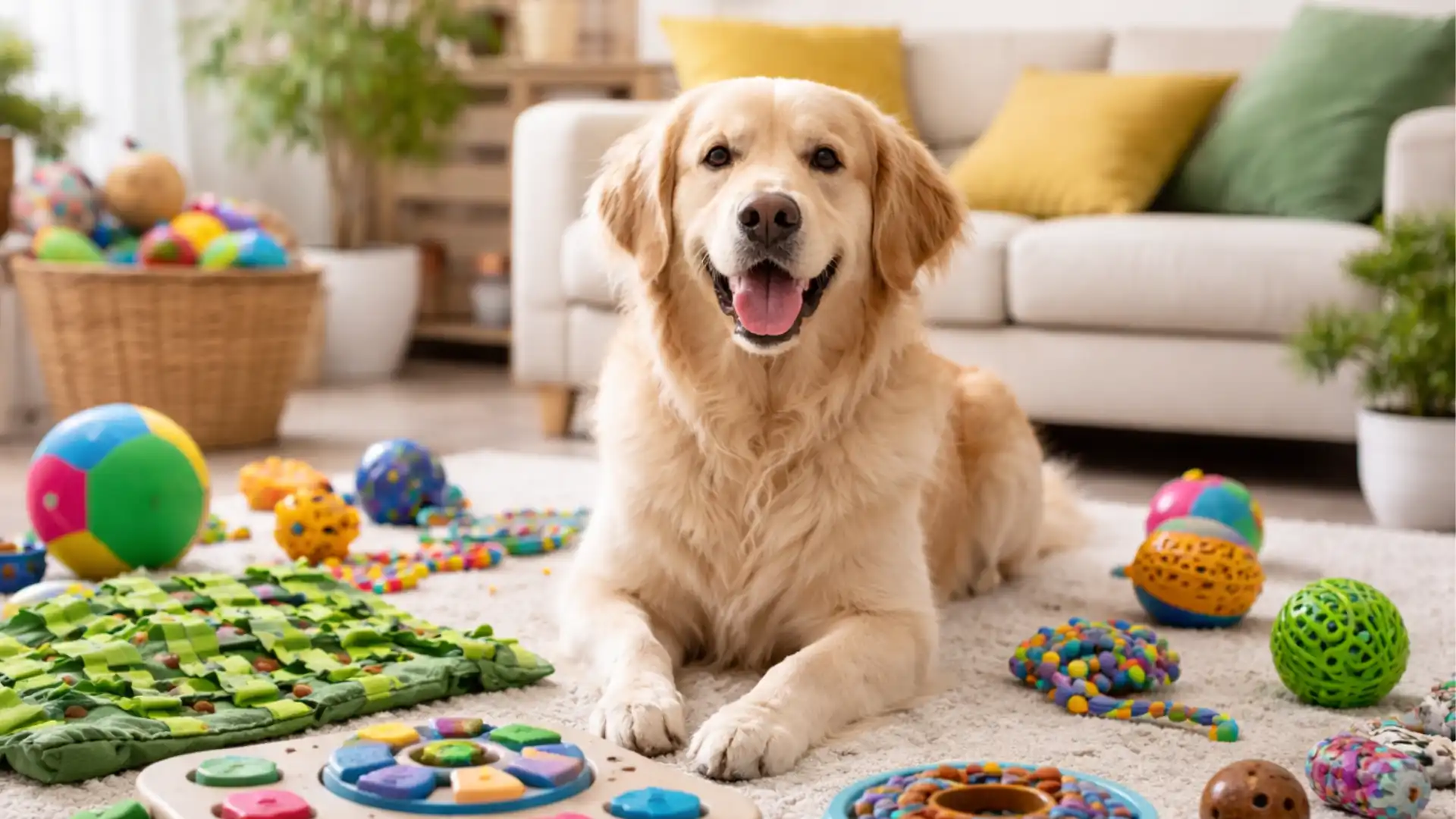
🧩 Step 2: Mental Enrichment (Critical)
Don’t just leave your dog in an empty room. Give them stuff to do.
Best enrichment options:
Puzzle Toys:
- Kong filled with frozen peanut butter/kibble
- Snuffle mats (hide treats in fabric)
- Puzzle feeders
- Treat-dispensing balls
Interactive Toys:
- Rotating toy selection (don’t leave same toys every day)
- Toys that make sounds
- Chew toys (bully sticks, Nylabones)
Food-Based Activities:
- Freeze their breakfast in a Kong (takes 30-60 min to finish)
- Hide treats around the house (scavenger hunt)
- Lick mats with yogurt/pumpkin
TV/Music:
- Leave TV on (DogTV channel exists!)
- Calming music or audiobooks
- White noise to mask outside sounds
“Do you have to go out at night? Read this guide
📹 Step 3: Set Up Monitoring (Peace of Mind)
Get a pet camera (Furbo, Wyze, etc.)
Why:
- See what your dog does all day
- Talk to them remotely (some cameras have this)
- Toss treats (Furbo has treat dispenser)
- Catch problems early
What you’ll learn:
- Most dogs sleep 90% of the time (this will ease your guilt!)
- When destructive behavior happens (boredom vs. anxiety)
- If they need more exercise
🚪 Step 4: Create a Safe Space
Don’t give your dog full house access immediately.
Options:
Crate training (for dogs who like it):
- NOT punishment—it’s a den
- Make it cozy (blankets, toys)
- Only if dog is comfortable (never force)
Puppy-proofed room (bathroom, kitchen):
- Remove hazards
- Comfortable bed
- Water bowl
- Toys
Baby gate section of house:
- More space than crate
- Still controlled environment
Why it works:
- Prevents destruction
- Reduces anxiety (smaller space = less overwhelming)
- Protects your dog from hazards
⏰ Step 5: Build Up Gradually
Don’t go from 0 to 8 hours overnight.
Training protocol:
Week 1: Leave for 30 minutes, return Week 2: 1 hour alone Week 3: 2 hours alone Week 4: 4 hours alone Week 5+: Full 8 hours
During training:
- Practice “calm departures” (don’t make leaving a big deal)
- Practice “calm arrivals” (don’t go crazy when you return)
- Reward calm behavior
Solutions for Dogs Who Can’t Handle 8 Hours
If your dog is struggling, here are your options:
🐕 Solution #1: Dog Walker (Midday Break)
What it is: Someone comes to your house midday, walks your dog for 20-60 minutes
Cost: $15-30 per walk (varies by city)
Pros:
- Breaks up the day
- Bathroom break
- Exercise and mental stimulation
- Your dog gets social interaction
Cons:
- Costs $300-600/month (daily walks)
- Trusting stranger in your home
- Scheduling consistency
Best for: Dogs who just need a potty break + stretch
Services: Rover, Wag, local dog walkers
🏢 Solution #2: Dog Daycare
What it is: Drop your dog off in the morning, pick up after work. They play with other dogs all day.
Cost: $25-50 per day ($500-1000/month for 5 days/week)
Pros:
- Socialization
- Tons of exercise
- Mental stimulation
- Peace of mind
Cons:
- Expensive
- Not all dogs like it (shy/reactive dogs struggle)
- Risk of illness (kennel cough)
- Commute to drop-off/pickup
Best for: Social, high-energy dogs who love playing with others
Consider: 2-3 days/week instead of daily (cost-effective compromise)
📱 Solution #3: Interactive Pet Cameras with Treat Dispensers
What it is: Cameras that let you see, talk to, and give treats to your dog remotely
Cost: $100-250 one-time
Pros:
- Interact with your dog during lunch break
- Dispense treats
- Talk to them (calming for some dogs)
- Monitor behavior
Cons:
- Doesn’t replace physical exercise
- Some dogs ignore it
- Can increase anxiety if overused
Best for: Dogs with mild separation anxiety or boredom
Top options: Furbo, Petcube
🏡 Solution #4: Hire a Pet Sitter or Neighbor
What it is: Someone checks on your dog midday (neighbor, friend, hired sitter)
Cost: $10-25 per visit (or free if friendly neighbor!)
Pros:
- Personal touch
- Flexible scheduling
- Cheaper than daycare
Cons:
- Reliability depends on person
- May not be available every day
Best for: Dogs who need bathroom breaks but not intense exercise
💼 Solution #5: Adjust Your Work Schedule
Options:
Work from home (even 1-2 days/week helps) Flexible hours (come in late, leave early to walk dog midday) Bring dog to work (if employer allows—surprisingly common in some industries) Split shifts with partner/roommate
Best for: People with job flexibility
🐾 Solution #6: Get a Second Dog (CAREFULLY)
The theory: Two dogs keep each other company
The reality: This can work beautifully OR make things worse
When it works:
- You already have a well-adjusted dog
- You get a second dog with compatible temperament
- Both dogs like each other
When it backfires:
- Double the destruction
- Dogs reinforce each other’s anxiety
- Twice the cost
Important: DON’T get a second dog to “fix” a problem dog. Fix the first dog’s issues FIRST.
Should I Get a Dog If I Work Full-Time?
Let’s address the elephant in the room.
The short answer: Yes, you can have a dog and work full-time. Millions of people do it successfully.
But you need to be realistic about:
✅ What Works:
- Adopting an adult dog (2-7 years old) with a calm temperament
- Choosing a low-to-moderate energy breed
- Committing to morning exercise (waking up earlier)
- Providing enrichment (puzzle toys, frozen Kongs)
- Budgeting for help (walker 2-3x/week or occasional daycare)
- Weekend quality time (hikes, park visits, training)
❌ What Doesn’t Work:
- Getting a high-energy puppy with zero help
- Expecting your dog to be fine with zero exercise
- Leaving them 10+ hours with no break
- Choosing a working breed (Border Collie, Husky) and expecting them to sleep all day
- Never investing in training
The Honest Assessment:
You CAN have a dog with a 9-5 job IF:
✅ You choose the right dog (adult, lower energy) ✅ You commit to morning/evening exercise ✅ You provide mental enrichment ✅ You’re willing to pay for occasional help (walker/daycare) ✅ You train your dog to be comfortable alone ✅ You dedicate weekends to quality time
You should NOT get a dog if:
❌ You work 10-12 hour days with no flexibility ❌ You travel constantly for work ❌ You’re not willing to wake up earlier for exercise ❌ You can’t afford dog walker/daycare if needed ❌ You want a high-maintenance breed just because it’s cute
The Guilt-Free Zone: Why 8 Hours Is OK (If Done Right)
Let me say something that might surprise you:
You are not a bad dog owner for working 8 hours a day.
Here’s why:
🐕 Dogs Sleep 12-14 Hours Per Day Anyway
Adult dogs naturally sleep:
- 12-14 hours per day
- More if they’re low-energy breeds
- In 2-4 hour chunks throughout the day
What this means: If you’re gone 8 hours, and your dog got morning exercise, they’re probably sleeping 6-7 of those hours anyway.
🏡 Domesticated Dogs Don’t Need 24/7 Interaction
Wild wolves are active because they’re hunting, patrolling territory, and surviving.
Your dog? Their “job” is to be a companion. They don’t need constant stimulation.
What they need:
- Quality time when you’re home
- Physical exercise
- Mental enrichment
- A safe environment
They DON’T need you hovering over them 24/7.
💰 Working Allows You to Afford Your Dog
Let’s be real:
- Vet bills aren’t cheap
- Quality food costs money
- Dog walkers, daycare, and boarding cost money
- Emergency vet visits can cost thousands
Working full-time gives you the financial stability to provide excellent care.
Would your dog rather:
- Have you home 24/7 but unable to afford vet care?
- OR have you gone 8 hours but able to afford everything they need?
The answer is obvious.
👥 Your Dog Doesn’t Resent You
Dogs don’t hold grudges. They don’t sit there thinking, “Ugh, she’s been gone for 7 hours and 43 minutes. I’m going to passive-aggressively ignore her when she gets home.”
What they think: “My person is back! This is the best moment of my entire life!”
Every. Single. Time.
Look, I’ve worked with hundreds of dog owners who feel crushing guilt about their work schedules. And here’s what I tell every single one:
Your dog would rather be with you for 8 hours a day than in a shelter, or rehomed, or never adopted at all.
If you’re reading this article, if you’re trying to figure out how to make it work, if you care this much—you’re already a great dog owner. Stop feeling guilty and start being present in the hours you DO have together.
Real Stories: How Full-Time Workers Make It Work
🐾 Story #1: The 9-5 Lab Mom
“I adopted a 3-year-old Lab mix while working a typical 9-5. Everyone told me Labs need constant exercise and I’d come home to a destroyed apartment. Here’s what I actually do: Wake at 6 AM, 45-min walk before work. Leave her with a frozen Kong and a snuffle mat. I have a pet cam—she sleeps 90% of the day. I come home at 5:30, we go to the park for an hour. Weekends are hikes and training. She’s the happiest dog I know. It’s doable if you commit to morning exercise.” — Jessica M., Chicago
🐾 Story #2: The Daycare Compromise
“I work 8-6 with commute. I have a high-energy Aussie mix (I know, not ideal for my schedule). I send him to daycare 3 days a week (Monday, Wednesday, Friday). The other two days, he gets a midday dog walker. It costs about $450/month total, but it’s worth it. He’s exhausted on daycare days and sleeps through the night. Non-negotiable for high-energy breeds.” — Marcus T., Seattle
🐾 Story #3: The Senior Dog Solution
“I wanted a dog but was honest about my 9-5 schedule and small apartment. I adopted an 8-year-old Basset Hound from a rescue. Best decision ever. He sleeps 18 hours a day. Our morning ‘walk’ is 15 minutes of slow sniffing. I leave him with a chew toy. When I get home, he’s excited for about 5 minutes, then back to napping. Senior, low-energy dogs are PERFECT for full-time workers.” — Priya K., Boston
FAQ: Everything You Need to Know
Can I leave my puppy alone for 8 hours?
No. Puppies under 6 months cannot hold their bladder for 8 hours. They also need frequent socialization, training, and supervision. Maximum alone time for puppies:
- 8-12 weeks: 1-2 hours
- 3-6 months: 2-4 hours
- 6-12 months: 4-6 hours
If you work full-time, either adopt an adult dog or arrange midday care (walker, daycare, sitter).
How do I know if 8 hours is too long for my dog?
Watch for these signs:
- Destructive behavior (chewing furniture)
- House-training accidents (previously trained dog)
- Excessive barking/howling
- Depression or lethargy
- Over-excitement when you return
- Self-harm behaviors (excessive licking, hot spots)
If you see 3+ of these signs, your dog is struggling. Implement solutions like dog walker, daycare, or behavior training.
What’s the longest you can leave a dog alone?
Maximum recommended: 8-10 hours for healthy adult dogs. Beyond 10 hours, you’re risking:
- Bladder/health issues (holding pee too long)
- Severe anxiety
- Behavioral problems
- Quality of life concerns
If you regularly work 10+ hours, you MUST have midday help (walker or daycare).
Is it cruel to leave a dog alone while at work?
No, IF:
- Your dog is an adult (not a puppy)
- They get morning exercise
- They have mental enrichment (toys)
- They’re comfortable being alone (trained)
- You provide quality time when home
Yes, IF:
- You work 12+ hours with no break
- You never exercise your dog
- You leave them in a crate for 10 hours
- They show signs of severe distress
Context matters. Most adult dogs handle 8 hours fine with proper care.
Should I get two dogs so they’re not alone?
Maybe—but don’t get a second dog to “fix” a first dog’s problems.
Two dogs can work IF:
- Your first dog is well-adjusted and likes other dogs
- You can afford double the cost
- You have space
- You carefully choose compatible temperaments
Two dogs backfire IF:
- First dog has anxiety (second dog won’t fix it)
- Dogs don’t get along
- You’re unprepared for double the work
Try: Foster a second dog first to see if it helps before committing.
What breed is best for someone who works full-time?
Best breeds for 9-5 workers:
- Low energy: English Bulldog, Basset Hound, Greyhound (retired racer), Shih Tzu, Cavalier King Charles
- Moderate energy: Poodle (Standard), Cocker Spaniel, Whippet
- Independent temperament: Basenji, Shiba Inu (if you want a cat-like dog)
Avoid if you work full-time:
- Border Collie, Australian Shepherd, Husky, Jack Russell, Belgian Malinois (working breeds need jobs)
Can I leave my dog alone overnight?
Not recommended beyond 10-12 hours max. Dogs need:
- Bathroom breaks
- Food and water
- Social interaction
If you must be away overnight, hire a pet sitter or use boarding. Don’t leave your dog alone for 16+ hours.
Do dogs get sad when left alone all day?
Some do, some don’t. It depends on:
- Individual temperament
- How long they’re alone
- Whether they’re exercised and enriched
- Training and comfort with solitude
Signs of sadness/depression:
- Lethargy, loss of appetite, withdrawal
- No excitement when you return
- Sleeping excessively (beyond normal 12-14 hours)
If you see these signs, consult a vet and implement enrichment/help.
What should I leave my dog with when I go to work?
Essential items:
- Fresh water (large bowl or automatic dispenser)
- Comfortable bed/crate
- Puzzle toys (Kong, snuffle mat, treat dispenser)
- Chew toys (Nylabone, bully sticks)
- Safe space (puppy-proofed room or crate)
- Background noise (TV, music, white noise)
Optional:
- Pet camera for monitoring
- Pee pads (for puppies/seniors only, not as habit)
- Another dog (if compatible)
The Bottom Line: Yes, You Can Work Full-Time and Have a Happy Dog
Here’s the truth that nobody talks about enough:
Millions of dogs live happy, fulfilled lives with owners who work 8-hour days. This is not only possible—it’s normal.
The difference between “my dog is miserable” and “my dog is thriving” isn’t whether you work full-time. It’s whether you:
- Choose the right dog for your lifestyle (adult, appropriate energy level)
- Commit to morning exercise (yes, even when you don’t want to)
- Provide mental enrichment (puzzle toys, frozen Kongs, rotation)
- Invest in help when needed (walker, daycare, sitter)
- Make the time you DO have together count
So stop feeling guilty. Start being intentional. Your dog doesn’t need you home 24/7. They just need you to show up—morning, evening, and weekends—with energy, love, and a commitment to their well-being. That’s enough. ❤️🐕
Ready to Make It Work?
If this article helped you feel more confident about working full-time with a dog, here are your next steps:
Before getting a dog:
- Assess your schedule realistically - Can you commit to morning walks?
- Budget for help - Can you afford $200-400/month for walker/daycare if needed?
- Research breeds - Choose low-to-moderate energy adult dogs
- Read: Should You Adopt a Dog? Pros & Cons Guide
If you already have a dog:
- Evaluate their current situation - Are they showing stress signs?
- Implement morning exercise - Start tomorrow
- Add enrichment - Get a Kong and freeze it tonight
- Consider help - Research local dog walkers or daycare options
- Read: How to Help Your Dog Adjust to Your Schedule
And remember: You’re doing better than you think. 🐾
🐾 You’ve Got This 🐾
Share this guide to help other working dog owners feel less guilty!
Related Articles:
- Why Adopting an Older Dog Might Be the Best Decision
- Dog Separation Anxiety: Signs & Solutions
- Best Low-Energy Dog Breeds for City Living
- Dog-Friendly Apartments: Finding the Right Place
- Does My Dog Love Me? Signs to Look For
Disclaimer: This article is for informational purposes only and does not replace professional veterinary or behavioral advice. Every dog is different. If your dog shows signs of severe separation anxiety or distress, consult a veterinarian or certified dog behaviorist.
Written by Alex | January 1, 2026 | DogCityGuide.com