It’s 11 PM. You just got an emergency call. You need to leave. Now. And you won’t be back until tomorrow afternoon.
Your dog is already asleep. You’re staring at them thinking:
“Can I actually leave them alone overnight?” “Will they be okay?” “Am I a terrible person if I do this?”
Here’s the straight answer:
Yes, most healthy adult dogs (ages 2-7) can physically handle 10-12 hours alone overnight—but it depends on their age, training, and your preparation. Puppies under 6 months? Absolutely not. Senior dogs with health issues? Risky. But an adult dog who’s crate-trained and used to being alone? Usually manageable for one night.
The real questions aren’t “can they”—it’s “how long exactly” and “how do I set them up for success.”
Let me walk you through the bladder math, the crate question, and the exact prep checklist so if you HAVE to leave overnight, your dog is safe and comfortable.
Table of Contents
- The “Bladder Math”: How Long Can They Really Hold It?
- Puppy vs Adult Dog: The Critical Differences
- To Crate or Not to Crate? (Sleeping Arrangements)
- The “Panic Check”: Will They Bark All Night?
- Preparation Checklist (Lights, Water, Temperature)
- What Counts as “Overnight” (And When It’s Too Long)
- Emergency Solutions If You’re Leaving in 1 Hour
- Signs Your Dog Didn’t Handle It Well
- FAQ: Overnight Dog Care Questions
The “Bladder Math”: How Long Can They Really Hold It?
This is the #1 limiting factor for overnight alone time.
The Science: Bladder Capacity by Age
Veterinary research shows:
“Most adult dogs can hold their pee for about 8 hours if necessary. However, while healthy adult dogs can physically hold their urine for up to 12 hours in emergency situations, this should never be routine.” Translation: 12 hours is the absolute maximum—and it’s uncomfortable for them.
The Chart: Age vs. Maximum Hold Time
| Dog Age | Maximum Bladder Hold (Overnight) | Realistic Overnight Duration | Verdict |
|---|---|---|---|
| Puppy (2-4 months) | 2-4 hours MAX | Cannot handle overnight alone | ❌ NO |
| Puppy (4-6 months) | 4-6 hours MAX | Still too young for 10+ hours | ⚠️ RISKY |
| Young Adult (6-12 months) | 6-8 hours | Short overnight (10 PM-8 AM) maybe OK | ⚠️ BORDERLINE |
| Adult (1-7 years) | 10-12 hours (emergency) | Can handle 10 PM-10 AM (12 hours) | ✅ YES (if prepared) |
| Senior (7+ years) | 6-8 hours (declining) | Bladder control weakens with age | ⚠️ RISKY |
The Rule of Thumb
For a healthy adult dog:
- 10-12 hours: Maximum emergency overnight (e.g., 10 PM to 8-10 AM)
- Beyond 12 hours: You MUST arrange for someone to check in
Key insight: The difference between 10 hours and 14 hours is MASSIVE for your dog. That extra 4 hours could mean:
- Forced accident (breaking house-training)
- Physical discomfort (painful bladder)
- Anxiety (no idea when you’re returning)
Puppy vs Adult Dog: The Critical Differences
If your dog is under 6 months old, stop reading. The answer is NO.
Why Puppies Cannot Handle Overnight Alone
Bladder capacity: Veterinary sources state puppies can hold their bladder for approximately 1 hour per month of age + 1.
Math:
- 2-month-old puppy: 3 hours MAX
- 3-month-old puppy: 4 hours MAX
- 4-month-old puppy: 5 hours MAX
- 6-month-old puppy: 7 hours MAX
10-12 hour overnight = IMPOSSIBLE for puppies under 6 months.
What Happens If You Try
Reality check:
- Puppy will be forced to pee in crate/room (breaks house-training)
- Puppy will be distressed (crying, anxiety)
- Puppy may develop separation anxiety (long-term behavioral damage)
- You’ll come home to a mess and a traumatized puppy
Don’t do it. Get a pet sitter, neighbor, or friend. No exceptions.
Adult Dogs: What Makes Them Different
Why adult dogs CAN handle overnight (if prepared):
- ✅ Fully developed bladder (can hold 10-12 hours)
- ✅ Mature temperament (can self-soothe)
- ✅ House-trained for years (won’t panic about holding it)
- ✅ Natural sleep patterns mean they’ll sleep most of the night anyway
But “can” doesn’t mean “thrives.” Even adult dogs need proper setup.
To Crate or Not to Crate? (Sleeping Arrangements)
This is the question that keeps people up at night (pun intended).
The Case FOR Crating Overnight
When crating is the better choice:
✅ Your dog is crate-trained and comfortable
- Sees crate as safe den (not punishment)
- Sleeps in crate regularly when you’re home
- Doesn’t panic or cry when crated
✅ You’re worried about destructive behavior
- Dog has history of chewing furniture when anxious
- Better to be safe (contained) than sorry (destroyed couch)
✅ House-training security
- Dogs won’t pee where they sleep
- Reduces accident risk
Research supports this: Studies show puppies restricted to crates overnight at 16 weeks or younger were less likely to develop separation anxiety later.
The Case AGAINST Crating Overnight
When free-roam is better:
✅ Your dog is NOT crate-trained
- Never sleeps in crate normally
- Has negative association with crates
- Will panic if suddenly crated for 12 hours
✅ Your dog is reliable and calm
- Never destructive when alone
- House-trained for years (zero accidents)
- Low anxiety temperament
✅ Comfort and space
- Can access water throughout night
- Can move to different sleeping spots
- Can look out window (if that comforts them)
The Compromise: Puppy-Proofed Room
Best of both worlds:
- Confine to safe room (bedroom, kitchen)
- Use baby gate (not closed door)
- Include: bed, water, pee pad (just in case)
- Remove hazards (cords, toxic plants, chewables)
This works if:
- Dog is okay with mild confinement
- Room is comfortable and familiar
- You’re worried about full house access
The “Panic Check”: Will They Bark All Night?
Your biggest fear: Neighbors calling the cops because your dog won’t shut up.
How to Predict Barking Behavior
Your dog will probably be FINE if:
- They’re used to being alone during work days
- They don’t have separation anxiety
- They’re tired before you leave (exercise!)
- They have something to occupy them initially
Your dog will probably BARK if:
- They have separation anxiety (destructive when you leave)
- They’re not used to being alone at night
- They’re high-energy and not tired
- This is a sudden change in routine
The Pet Camera Solution
Best investment: $30-150
Why you need one:
- See what your dog does (most sleep—you’ll be relieved!)
- Talk to them remotely (some cameras have 2-way audio)
- Catch problems early (excessive barking, distress)
- Peace of mind (check in at 2 AM if you’re anxious)
Recommended:
- Wyze Cam ($20-30, budget option)
- Furbo ($100-150, has treat dispenser + bark alerts)
White Noise & Calming Aids
What actually helps:
Background noise:
- Leave TV on low (voices = comforting)
- White noise machine (blocks outside sounds that trigger barking)
- Calming music (classical, specially designed dog music)
Calming products:
- Adaptil diffuser ($25-40, releases dog-calming pheromones)
- Thundershirt ($40, compression calms anxiety)
- CBD treats (consult vet first, but some swear by them)
What DOESN’T work:
- Leaving lights blazing (more on this below)
- Leaving food out (won’t stop barking, may cause bloat)
Preparation Checklist (Lights, Water, Temperature)
The details that make or break overnight success.
💡 Lights: On or Off?
The #1 question people Google at 2 AM.
The veterinary answer: Research shows:
“Most healthy adult dogs don’t require light at night. Dogs generally have better low-light vision than humans, and a puppy that sleeps in the dark sleeps better and stays healthier because darkness signals the dog’s brain to start producing melatonin.” Translation:
- ✅ Turn lights OFF (or very dim night light)
- ✅ Natural light is fine (leave curtains open for moonlight/streetlights)
- ❌ Don’t leave bright lights on (disrupts sleep, wastes energy)
Exception: If your dog is anxious, senior with poor vision, or scared of dark, a dim night light is okay. Veterinary sources note anxious or senior dogs may benefit from ambient light.
Pro tip: Keep lighting consistent with what they’re used to. Don’t suddenly change routine.
💧 Water: How Much and Where
Critical: Dogs can’t go 12 hours without water.
Setup:
- Two water bowls (in case one spills)
- Heavy ceramic bowls (harder to knock over than plastic)
- Fill completely (they may drink more from anxiety)
Advanced: Automatic water dispenser ($20-40 on Amazon) if you’re worried about spills.
DON’T:
- Restrict water (causes dehydration, kidney stress)
- Use only one bowl (if it spills, they’re screwed)
🌡️ Temperature: The Non-Negotiable
Your dog can’t adjust the thermostat. You can kill them if you get this wrong.
Safe range:
- Summer: Set AC to 68-75°F (DO NOT turn it off to save money)
- Winter: Set heat to 68-72°F (space heaters okay if safe)
Why this matters:
- Heatstroke can happen in hours (dogs overheat fast)
- Hypothermia risk if heat fails overnight (especially small/short-haired breeds)
Check weather forecast. If a cold snap or heat wave is predicted, rethink leaving them alone.
🍖 Food: To Leave or Not?
Counterintuitive answer: DON’T leave extra food out.
Why:
- Dog may gorge and vomit (anxiety eating)
- Dog may gorge and get bloat (life-threatening emergency)
- Food sitting out attracts pests
Better plan:
- Feed normal dinner before you leave
- Give frozen Kong or long-lasting chew (occupies them, not a meal)
- Feed breakfast when you return
Exception: If you’re leaving at 10 PM and returning at noon next day (14 hours), you could leave a small portion of breakfast in slow-feeder bowl for morning. But honestly, they’ll be fine waiting.
🧸 Enrichment: Keep Them Busy
First 30-60 minutes alone = most critical for preventing anxiety.
Best distractions:
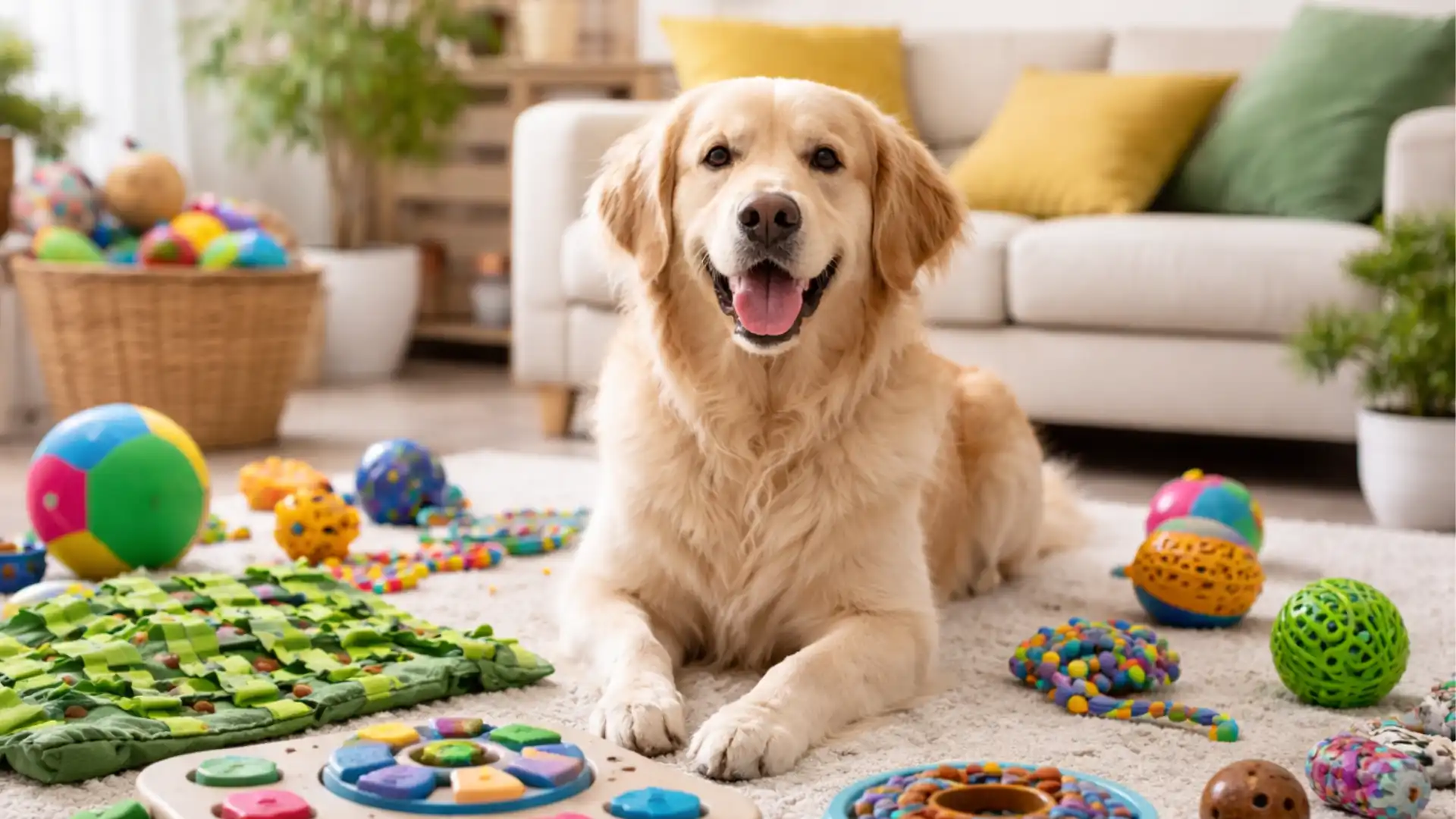
- Frozen Kong (stuffed with peanut butter + kibble, freeze for 2+ hours)
- Bully stick (lasts 30-60 min, keeps them occupied)
- Snuffle mat (hide treats, engages their brain)
Goal: By the time they finish, they’re tired and ready to sleep.
What Counts as “Overnight” (And When It’s Too Long)
Not all “overnights” are created equal.
Scenario A: Short Overnight (Manageable)
Example: Leave 10 PM, return 8 AM Duration: 10 hours Verdict: ✅ Generally okay for healthy adult dogs
Why it works:
- Within bladder capacity
- Most of those hours are natural sleep time anyway
- Dog got evening walk before you left
Scenario B: Extended Overnight (Pushing It)
Example: Leave 8 PM, return 10 AM Duration: 14 hours Verdict: ⚠️ Risky—borderline too long
Why it’s risky:
- Exceeding comfortable bladder capacity
- Dog missed evening walk
- More likely to have accident or distress
Solution: If this is your situation, try to get a neighbor to pop in at 10 PM for a quick potty break.
Scenario C: “Overnight” That’s Actually 24 Hours (NEVER OKAY)
Example: Leave Friday 6 PM, return Saturday 6 PM Duration: 24 hours Verdict: ❌ This is neglect. Don’t do it.
Why:
- No dog can hold bladder 24 hours
- Severe dehydration risk
- Missed two meals
- Psychological trauma
For weekend trips, see: Leaving Dog Alone for 3 Days: Weekend Guide
Emergency Solutions If You’re Leaving in 1 Hour
You just got the call. You need to leave NOW. What do you do?
Quick Option #1: Text Your Network
Send this text to 5-10 people:
“Emergency overnight trip. Can anyone let my dog out tomorrow morning around 8 AM? Just 10 min potty break. Will pay $20 or return the favor!”
Someone will probably say yes. Even one midday break transforms a risky 14-hour stretch into two manageable 7-hour chunks.
Quick Option #2: Instant-Book Dog Sitter
Rover.com or Wag.com:
- Filter for “instant book” + “last minute”
- Book drop-in visit for next morning ($25-40)
- Leave key under mat or lockbox code
Takes 15 minutes to arrange.
Quick Option #3: Trustworthy Neighbor
Knock on door:
“Hi, I have a family emergency and need to leave overnight. Could you possibly let my dog out tomorrow at 8 AM? I’ll leave a key and show you where everything is. I’ll pay you $20.”
Most neighbors will help in emergencies.
Signs Your Dog Didn’t Handle It Well
When you get home, watch for these red flags:
🚩 Physical Distress
- Excessive panting (even though not hot)
- Trembling or shaking
- Vomiting or diarrhea
- Signs of dehydration (dry gums, lethargy)
🚩 Behavioral Red Flags
- House accident (even though fully trained)
- Destructive behavior (chewed furniture, scratched doors)
- Frantic, can’t-calm-down greeting (jumps for 20+ min)
- Withdrawn, won’t make eye contact
🚩 Long-Term Changes
- Suddenly clingy (won’t let you out of sight for days after)
- Regression in training (accidents during day)
- Increased anxiety when you grab keys
If you see 3+ of these signs, overnight alone was too much for your dog. Next time, you MUST arrange care.
FAQ: Overnight Dog Care Questions
Is it illegal to leave a dog alone overnight?
Short answer: Not specifically, but it can be.
Animal welfare laws generally don’t specify “overnight” but require dogs have access to food, water, and shelter. If leaving your dog overnight causes suffering (no water, forced to soil themselves, extreme temperatures), it can be considered animal neglect or cruelty, which is illegal in all U.S. states.
What this means: Leaving a healthy adult dog alone 10-12 hours with water, climate control, and safe space is probably legal. Leaving a puppy, or leaving any dog 24+ hours, or in unsafe conditions? That’s when you risk legal consequences.
Laws vary by state, so check local ordinances. But the standard is: does the dog have adequate care?
Can I leave my dog alone for 24 hours?
No. Absolutely not.
24 hours without human check-in is:
- Beyond bladder capacity (will be forced to soil themselves)
- Missed two meals
- Serious dehydration risk (water bowls can spill/empty)
- Psychological distress (no idea if you’re ever coming back)
- Medical emergency risk with no one to help
This crosses into neglect. If you’ll be gone 24+ hours, you MUST arrange pet sitting, boarding, or taking dog with you.
How long can a dog hold pee overnight?
Healthy adult dogs: 10-12 hours maximum (emergency only) Young adults (6-12 months): 6-8 hours Puppies (under 6 months): 2-6 hours (age-dependent) Senior dogs: 6-8 hours (bladder control declines)
Research shows that while adult dogs can hold for 12 hours physically, regularly doing so increases risk of UTIs and bladder stones. Ideal max is 8 hours.
Should I leave a light on for my dog at night when I’m gone?
Generally, no. Veterinary experts say most healthy adult dogs prefer darkness for sleep because it promotes melatonin production. Dogs have better night vision than humans and don’t need light to navigate.
Exceptions:
- Anxious dogs may feel safer with dim night light
- Senior dogs with poor vision may need ambient light to prevent injuries
- Puppies sometimes benefit from low light
Best practice: Keep lighting consistent with what they’re used to. Natural light from windows is ideal.
Should I crate my dog at night when I’m gone overnight?
Depends on two factors:
-
Is your dog crate-trained?
- If YES (comfortable, sees crate as safe den): ✅ Crating is fine
- If NO (never uses crate, has negative association): ❌ Don’t suddenly crate them for 12 hours
-
How long will you be gone?
- If 10-12 hours: Crating is okay IF dog is already crate-trained
- If 14+ hours: Too long for crate—use puppy-proofed room instead
Important: Never use crate as punishment. Only crate dogs who voluntarily sleep there when you’re home.
Can I leave my puppy alone at night?
Age matters:
- Under 4 months: NO—cannot hold bladder long enough
- 4-6 months: Only if “overnight” means 6-8 hours MAX (not 10-12)
- 6-12 months: Short overnight (10 PM-8 AM) starting to be possible
- Over 12 months: Approaching adult capacity
Reality check: If you have a young puppy and need to leave overnight, you must arrange care. Pet sitter, neighbor, or friend. No exceptions.
What if my dog has separation anxiety?
If your dog has diagnosed separation anxiety, overnight alone is NOT recommended.
Signs of separation anxiety:
- Destructive behavior when you leave (even for short periods)
- Excessive barking/howling entire time alone
- Self-harm (excessive licking, hot spots, trying to escape)
- House accidents from anxiety (not bladder capacity issue)
For these dogs: Even one night alone can worsen anxiety significantly. You need:
- Professional behavior modification (certified trainer or vet behaviorist)
- Medication (in severe cases, prescribed by vet)
- Shorter alone times until anxiety is managed
Don’t push it. Get help first.
My dog was fine alone overnight before. Why are people saying it’s risky?
“Fine” is relative. Just because your dog survived doesn’t mean they were comfortable or that no harm occurred.
Hidden issues:
- UTIs can develop without obvious symptoms
- Chronic stress affects health long-term
- Some dogs are stoic (suffer silently)
- One time being “fine” doesn’t mean repeating it regularly is safe
Think of it like this: You could probably hold your pee for 12 hours if you HAD to. But would you want to do it three times a week? Would it be comfortable? Healthy?
Occasional overnight emergency = usually okay. Regular routine = not ideal.
The Bottom Line: Emergency Only, Not a Plan
Look, emergencies happen. And if you’re reading this at 1 AM in a panic because you have to leave in an hour—breathe. Your dog will probably be okay for one night.
But “probably okay” and “thriving” are different. Here’s what you need to know:
- Adult dogs (1-7 years): Can handle 10-12 hours if prepared
- Puppies (under 6 months): Cannot handle overnight—get a sitter
- 12 hours is the hard limit: Beyond that, MUST have someone check in
- Prep matters: Water, safe temp, crate/safe space, tired dog before leaving
- One time = emergency. Routine = problem. Don’t make this your regular plan
If you can get even ONE person to pop in for 10 minutes the next morning, do it. That one potty break transforms “risky” into “manageable.”
Your dog trusts you to keep them safe. Most of the time, overnight alone is survivable. But survivable isn’t the goal—comfortable and secure is. 🐾
Related Articles:
- Can I Leave My Dog Alone for 8 Hours? Working Owner’s Guide
- Can I Leave My Dog Alone for 3 Days? Weekend Reality Check
Sources & Research
This article references peer-reviewed research and expert veterinary sources:
- GoodRx: How Long Can Dogs Hold Their Pee? - Bladder capacity and health risks
- Nature Scientific Reports: Sleep-Wake Cycles in Dogs - Circadian rhythms and natural sleep patterns
- Dogster: Should I Leave a Light On? (Vet Answer) - Veterinary lighting recommendations
- PetsCare: Leave Light On for Dog - Light and sleep quality
- Adopt a Pet: Legal Requirements - Animal welfare laws
- Separation Buddy: Crate Training Research - Crating and separation anxiety prevention
Written by Alex | January 4, 2026 | DogCityGuide.com