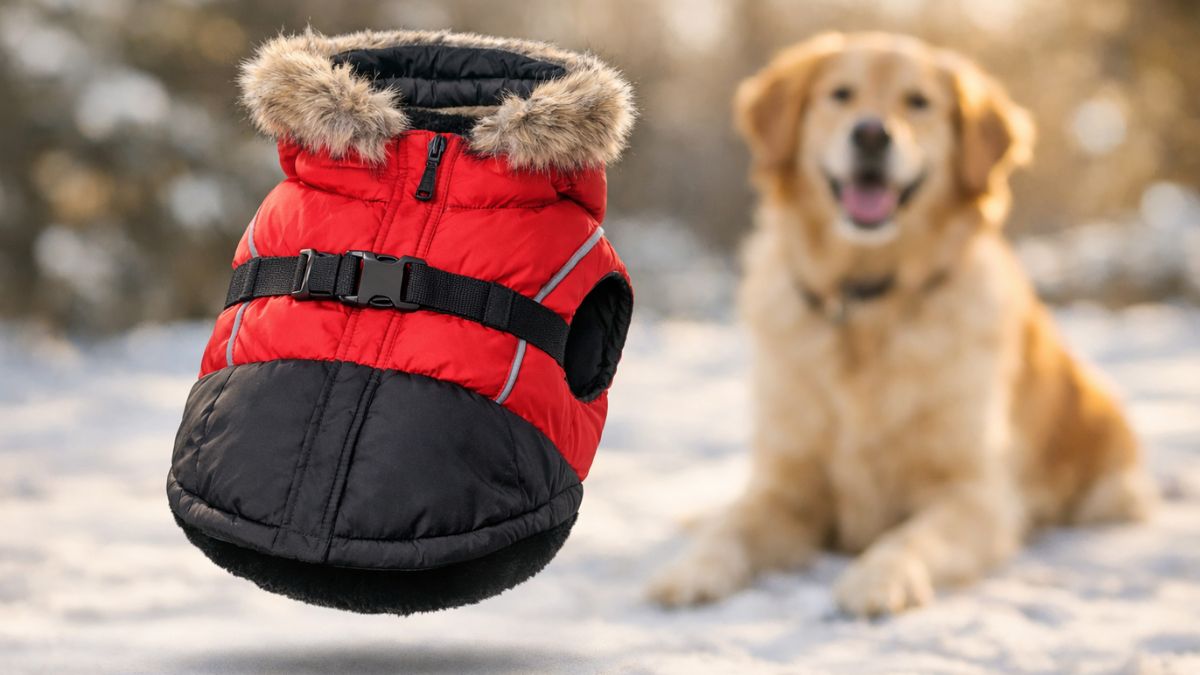
The debate is everywhere: Some people swear their dogs need winter jackets. Others roll their eyes and call it unnecessary pampering. So who’s right?
The actual answer: It depends on your dog—and it’s more scientific than you might think.
Let’s cut through the cute Instagram photos and get to the facts about which dogs genuinely need winter protection, which don’t, and why that “overdressed poodle” might actually be the one who needs it most.
Why Some Dogs Get Cold Faster Than Others
Before we get into jackets, let’s understand the science of why not all dogs experience cold the same way.
The 4 Key Factors:
1. Coat Type & Thickness
Not all fur is created equal:
- Double-coated breeds (Huskies, Malamutes, German Shepherds): Built-in insulation with dense undercoat that traps warm air
- Single-coated breeds (Greyhounds, Whippets, Pit Bulls): Thin fur with minimal insulation
- Short-haired breeds (Chihuahuas, Boston Terriers): Little to no protection from elements
- Hairless breeds (Chinese Crested, Xoloitzcuintli): Zero natural protection
Science fact: A Husky’s coat can keep them warm down to -50°F (-45°C). A Chihuahua starts shivering at 45°F (7°C).
2. Body Size & Surface Area
Small dogs lose heat faster due to physics:
- Higher surface area to body volume ratio
- Heat escapes more quickly through skin
- Bodies cool down rapidly in cold air
- Closer to cold ground (snow, ice, frozen pavement)
Why your Dachshund shivers but your Newfoundland doesn’t: It’s not “being dramatic”—it’s thermodynamics.
3. Body Fat & Muscle Mass
Lean dogs = cold dogs:
- Greyhounds, Whippets, and other sight hounds have almost no body fat
- Muscle generates heat, but lean muscle doesn’t insulate well
- Athletic breeds with low body fat percentage feel cold more acutely
Breeds that stay warmer: Those with moderate body fat and heavy builds (Saint Bernards, Bernese Mountain Dogs)
4. Age & Health
Puppies: Can’t regulate body temperature effectively yet Senior dogs: Slower metabolism, less body heat production Dogs with health issues: Arthritis, thyroid problems, heart conditions all affect cold tolerance Thin or underweight dogs: Less insulation, more vulnerable
Temperature Guide: When a Dog Actually Needs a Jacket
Stop guessing. Here’s the science-based breakdown:
🌡️ Temperature Thresholds by Dog Type:
Small Dogs (Under 20 lbs)
Chihuahuas, Yorkies, Pomeranians If you have a small dog—or a Chihuahua in particular—the way winter affects them can be very different from what most people expect. Their size, coat, and body structure make cold weather a bigger challenge than it is for many other breeds. If you want to go deeper into this specific case, you can read more here:Do Chihuahuas Need a Winter Jacket?
Comfortable
Above 45°F (7°C)
No jacket needed
Chilly
32-45°F (0-7°C)
Jacket recommended
Dangerous
Below 32°F (0°C)
Jacket required
Medium Dogs (20-50 lbs)
Beagles, Bulldogs, Cocker SpanielsComfortable
Above 32°F (0°C)
No jacket needed (most)
Chilly
20-32°F (-7-0°C)
Depends on coat type
Dangerous
Below 20°F (-7°C)
Short-haired need jackets
Large Dogs (Over 50 lbs)
Labs, Golden Retrievers, German ShepherdsComfortable
Above 20°F (-7°C)
Double-coats are fine
Chilly
0-20°F (-18—7°C)
Short-haired may need help
Dangerous
Below 0°F (-18°C)
Even thick coats need limits
Comfort Item for Dogs During Owner Absence
A familiar scent or calming aid can help dogs settle faster and feel safer while you’re away — especially during the first difficult days.
As an Amazon Associate, we may earn from qualifying purchases.
⚠️ Important Modifiers:
Wind Chill Matters:
- 32°F with 20mph wind = feels like 19°F
- Always factor in wind when deciding
Wet Weather:
- Rain + cold = much worse
- Wet fur loses insulating properties
- Even thick-coated dogs can need protection
Activity Level:
- Active walking/running = generates body heat
- Standing still (city bathroom breaks) = gets cold fast
Duration:
- 5-minute bathroom break vs. 30-minute walk = different needs
Small Dogs vs Large Dogs in Cold Weather
Let’s get specific about the real differences:
🐕 Small Dog Reality Check:
Why they genuinely suffer more in cold:
✅ Belly nearly touches cold ground - direct contact with snow/ice ✅ Entire body fits in “cold air pocket” near ground (coldest zone) ✅ Less body mass to generate and retain heat ✅ Often have thin, single coats (many toy breeds) ✅ Get tired faster trudging through snow (exhaustion = colder)
Breeds that DEFINITELY need winter jackets:
- Chihuahuas
- Italian Greyhounds
- Miniature Pinschers
- Yorkshire Terriers
- Chinese Cresteds (hairless)
- Toy Poodles (if clipped short)
- Dachshunds
- Papillons
Real consequence: Small dogs can get hypothermia in under 15 minutes in freezing temperatures without protection.
🦮 Large Dog Reality Check:
Why most don’t need jackets:
✅ Greater body mass = more heat production ✅ Higher off the ground = out of coldest air layer ✅ Many bred for cold climates (working/herding breeds) ✅ Dense double coats designed for winter
Large breeds that DO need jackets:
- Greyhounds (thin coat, no body fat)
- Pit Bulls (short single coat)
- Boxers (short coat, lean build)
- Great Danes (short coat, not bred for cold)
- Dobermans (short coat)
- Rhodesian Ridgebacks (bred for African heat!)
- Any large dog with health issues or senior
The exceptions prove the rule: It’s not about size—it’s about coat and build.
📊 Side-by-Side Comparison:
Cold Weather Tolerance Comparison
🐕 Small Dog (Chihuahua)
- ❄️Cold tolerance: 15-20 minutes at 32°F
- 🧥Jacket needed: Below 45°F for comfort
- ⚠️Risk level: High - rapid heat loss
- 🏃Snow depth issue: Can’t walk in 4+ inches
🦮 Large Dog (Husky)
- ❄️Cold tolerance: Hours at -20°F
- 🧥Jacket needed: Rarely (unless extreme)
- ✅Risk level: Low - built for cold
- 🏃Snow depth issue: Loves deep snow
Why Dog Jackets Are Still Considered “Extra” (and Why That’s Outdated)
Let’s address the elephant in the room: Why do people judge dog jackets?
The Old Mindset:
“Dogs have fur. Fur is warm. Therefore, jackets are silly human projection.”
The problem with this logic:
- Not all fur is the same (we’ve covered this)
- Dogs haven’t evolved for modern urban winters (see below)
- We selectively bred many dogs to NOT handle cold (toy breeds, sight hounds)
The “Dogs Are Wolves” Fallacy
Argument: “Wolves don’t wear jackets!”
Reality check:
✅ Wolves have thick double coats specifically evolved for harsh winters ✅ Wolves don’t take short bathroom breaks on city streets—they stay in dens during extreme cold ✅ Wolves are constantly moving (hunting, patrolling) which generates heat ✅ Your Chihuahua is NOT a wolf (seriously, have you looked at your Chihuahua?)
We bred dogs to be:
- Smaller
- Cuter
- Lap companions
- Specialized workers
Many of these traits came at the cost of cold tolerance.
The Urban Winter Reality
What “winter” means for your dog:
❌ Not: Romping through snowy forests at will ✅ Actually: Standing still on frozen pavement at 6am while trying to pee quickly before you both go back inside
Urban factors that make it worse:
- Concrete/asphalt holds cold longer than natural ground
- Salt and de-icers burn paws (another reason for boots!)
- Wind tunnels between buildings intensify wind chill
- Short, frequent breaks don’t allow body to warm up between trips
Translation: Your dog’s winter experience is DIFFERENT from what their ancestors faced, and often harder.
The Shift in Perspective
Modern understanding:
“Providing appropriate protection for your dog’s specific breed, size, and coat type is responsible pet ownership—not pampering.”
It’s the same as:
- Putting sunscreen on hairless breeds in summer
- Using cooling mats for brachycephalic (flat-faced) breeds in heat
- Providing ramps for dogs with joint issues
It’s adapting care to your individual dog’s needs. That’s what good owners do.
How to Choose the Right Winter Jacket (Without Overdoing It)
If your dog genuinely needs a jacket, here’s how to do it right:
✅ What to Look For:
1. Proper Fit
- Covers from neck to base of tail
- Doesn’t restrict leg movement
- Adjustable straps (chest and belly)
- Easy to put on (your dog shouldn’t dread it)
Measure your dog:
- Neck circumference
- Chest (widest part)
- Back length (neck to base of tail)
2. Appropriate Material
For dry cold:
- Fleece or wool lining
- Wind-resistant outer layer
- Lightweight but insulating
For wet/snowy conditions:
- Waterproof or water-resistant outer
- Still breathable (avoid sweating)
- Fleece lining underneath
Avoid:
- Purely decorative jackets (no insulation)
- Non-breathable materials (plastic-y feel)
- Anything too heavy (your dog still needs to move comfortably)
3. Coverage Zones
Must cover:
- Chest (where vital organs are)
- Back (along spine)
- Belly (especially for small dogs)
Optional extras:
- Leg coverage (for extreme cold or very small dogs)
- Neck warmer/hood (not necessary for most)
4. Visibility Features
Bonus safety:
- Reflective strips for dark winter mornings/evenings
- Bright colors (if your dog is off-leash in snow)
❌ What to AVOID:
1. Over-Dressing
Signs you’ve gone too far:
- Dog is panting indoors with jacket on
- Reluctant to move/play
- Trying to remove it constantly
- Sweating (yes, dogs sweat through paws)
Rule: If it’s warm enough indoors, jacket comes OFF.
2. Fashion Over Function
Skip:
- Jackets that barely cover the back
- Outfits with hats, shoes, and multiple layers (unless medical necessity)
- Anything tight or restrictive
- Costumes disguised as winter wear
Remember: The goal is warmth and protection, not Instagram likes.
3. Leaving It On Too Long
When to remove:
- Once inside (always!)
- If your dog starts panting
- During active play that generates heat
- If weather warms up mid-walk
Overheating is dangerous too!
🎯 Quick Decision Guide:
Your dog needs a jacket if:
- They’re shivering, reluctant to go outside, or lifting paws repeatedly
- They’re a small breed + temperature is below 45°F
- They’re short-haired/single-coat + temperature is below freezing
- They’re senior, puppy, or have health issues + it’s genuinely cold
- It’s wet + cold (rain/snow + low temps)
Your dog does NOT need a jacket if:
- They’re a double-coated breed in their element (Huskies, Malamutes, etc.)
- Temperature is above their comfort threshold
- They’re actively running/playing
- They show no signs of discomfort
- You just think it looks cute (not a good enough reason!)
Real Signs Your Dog is Too Cold (Jacket or Not)
Watch for these indicators:
🚨 Immediate action needed:
- Intense shivering
- Whining or barking (distress signals)
- Slowing down significantly or stopping
- Lifting paws repeatedly or refusing to walk
- Hunched posture, tail tucked
- Seeking shelter or trying to turn back home
🧊 Hypothermia warning signs:
- Lethargy or weakness
- Stumbling or loss of coordination
- Pale gums
- Slow heart rate
- Loss of consciousness
If you see hypothermia signs: Get your dog warm immediately (blankets, warm room—NOT hot water directly), and call your vet.
Frequently Asked Questions
Do short-haired large dogs need winter jackets?
Yes, many do! Breeds like Greyhounds, Pit Bulls, Boxers, and Dobermans have short, single-layer coats that provide minimal insulation. Despite their size, they get cold quickly below freezing, especially during inactive periods like bathroom breaks.
At what temperature should I put a jacket on my small dog?
For most small dogs (under 20 lbs), consider a jacket when temperatures drop below 45°F (7°C). Below 32°F (0°C), a jacket becomes necessary, not optional. Always factor in wind chill and wet conditions, which make it feel colder.
Can dogs overheat in winter jackets?
Absolutely! Always remove jackets when indoors, during active play, or if your dog shows signs of panting or discomfort. Overheating is dangerous and can happen even in winter if a dog is over-dressed or very active.
Do Huskies and other cold-weather breeds ever need jackets?
Rarely. Double-coated breeds like Huskies, Malamutes, and Samoyeds are built for extreme cold. However, senior dogs, puppies, or those with health issues may benefit from extra protection in severe conditions. Generally, they’re more at risk of overheating than getting too cold!
How do I know if my dog’s jacket fits properly?
A proper fit covers the back from neck to tail base, doesn’t restrict movement, and stays secure without being tight. You should be able to fit two fingers under the straps comfortably. Your dog should move normally—no limping, pulling, or trying to remove it.
Is it cruel NOT to put a jacket on a dog that needs one?
If your dog is shivering, refusing to go outside, or showing signs of being cold, and you’re not providing adequate protection, yes—that’s neglecting their welfare. Just as we wouldn’t send a child outside in a T-shirt in winter, small and short-haired dogs deserve appropriate protection.
The Bottom Line
Do dogs need winter jackets?
It’s not a yes or no answer—it’s a “depends on your dog” answer.
If you have:
- A Chihuahua → Yes, absolutely
- A Greyhound → Yes, despite the size
- A Husky → Probably not
- A Labrador → Maybe, if short bathroom breaks in extreme cold
The real question isn’t “Do dogs need jackets?” but rather:
“Does MY dog, with THEIR specific coat, size, age, and health, need protection in THIS weather?”
And once you understand the science—body size, coat type, temperature thresholds—you’ll know the answer.
There’s no shame in protecting your dog. There’s only responsible ownership that adapts to your individual dog’s needs.
So yes, that tiny dog in a puffy jacket? They probably genuinely need it. And that Husky rolling in the snow with no jacket? They’re exactly where they want to be.
Both are right. Because they’re different dogs.
Related Reading
Keep your dog comfortable and safe in all weather conditions:
- Best Dog-Friendly Winter Cities in Europe - Travel safely with your pup
- How to Travel Safely with Small Dogs in Winter - Winter car safety tips
- Best Cooling Mats for Dogs in Summer - Don’t forget summer protection!
- Complete Dog Travel Guide - All-season prep