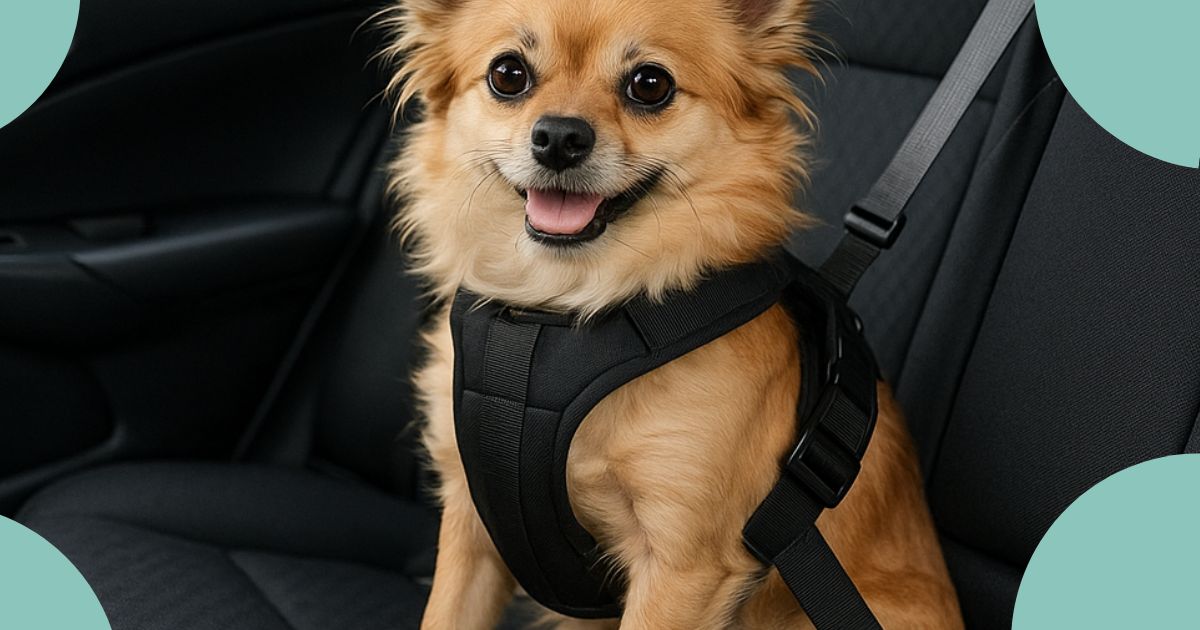
Picture this: You’re driving to the park with your Chihuahua sitting on your lap, or your Yorkie lounging freely on the passenger seat. It feels harmless, even adorable. But here’s the terrifying truth—in a 30 mph crash, an unrestrained 10-pound dog becomes a 300-pound projectile.
According to 2025 pet travel statistics, 64% of dog owners travel with their pets by car, yet only 16% use proper crash-tested restraints. That gap represents thousands of preventable injuries and deaths every year.
This isn’t about being paranoid—it’s about being prepared. Just like you’d never drive without a seatbelt, your small dog deserves the same level of protection. This comprehensive guide will show you exactly how to keep your furry co-pilot safe, comfortable, and secure on every journey.
Why Car Safety Matters More Than You Think
The Physics of Car Crashes
When your car suddenly stops in a collision, everything inside continues moving at the original speed—including your dog. The force multiplies dramatically:
| Dog Weight | @ 30 mph Crash | @ 50 mph Crash |
|---|---|---|
| 5 lbs | 150 lbs force | 400 lbs force |
| 10 lbs | 300 lbs force | 800 lbs force |
| 20 lbs | 600 lbs force | 1,600 lbs force |
An unrestrained small dog can:
- Fly through the windshield (even at low speeds)
- Strike and injure passengers (especially children)
- Become trapped under pedals (causing secondary accidents)
- Escape through broken windows (leading to traffic incidents)
Real-World Statistics (2025 Data)
- 30,000+ dogs injured in US car accidents annually
- 56% of unrestrained dogs died in crashes that humans survived
- Driver distraction from loose pets caused 20% of dog-related accidents
- Small dogs (< 25 lbs) are 3x more likely to be unrestrained than large dogs
The 3 Types of Small Dog Car Restraints (Ranked by Safety)
Let’s break down your options, starting with the safest:
Option 1: Crash-Tested Car Seats (Safest) ⭐⭐⭐⭐⭐
What They Are: Specialized seats that combine a harness attachment point with a secured base. Think of them as miniature child car seats designed for dogs under 25 pounds.
Why They’re Best:
- Independently crash-tested to simulate real collisions
- Absorb impact forces through structured materials
- Prevent ejection in rollover accidents
- Elevate your dog for better visibility (reduces car sickness!)
Best For:
- Dogs under 20 lbs (Chihuahuas, Yorkies, Maltese, Pomeranians, Toy Poodles)
- Frequent travelers
- Highway driving
- Multi-hour trips
Top Crash-Tested Models (2025):
-
Sleepypod Clickit Sport
- Weight limit: Up to 25 lbs
- Crash test rating: Passes Center for Pet Safety standards
- Price: $99-129
- Why it wins: Only harness/car seat combo to pass independent crash tests at 30 mph
- Downside: Requires precise sizing
-
Kurgo Tru-Fit Enhanced Strength Dog Car Harness
- Weight limit: 5-75 lbs (multiple sizes)
- Crash test rating: Tested up to 75 lbs at 30 mph
- Price: $45-65
- Why we like it: Budget-friendly, doubles as walking harness
- Downside: No elevated seat base
-
PupSaver Life Saver
- Weight limit: Up to 30 lbs
- Crash test rating: Passes 30 mph frontal impact tests
- Price: $249-299
- Why it’s premium: Airline-approved carrier + car seat combo
- Downside: Expensive
How to Install:
- Place car seat on back seat (middle position safest)
- Thread seatbelt through designated slots (check manual!)
- Pull tight—no more than 1 inch of wiggle
- Attach dog’s harness to built-in tether
- Test: Try to slide seat. It shouldn’t move more than 1 inch in any direction
Pro Tip: Never install in front seat if passenger airbag is active. Airbag deployment can injure or kill small dogs.
Option 2: Crash-Tested Harnesses (Good) ⭐⭐⭐⭐
What They Are: Harnesses with reinforced stitching and metal buckles designed to attach to your car’s seatbelt system.
Safety Level: Better than nothing, but not as protective as car seats. They prevent ejection but don’t absorb impact forces as well.
Best For:
- Short trips (under 1 hour)
- Local errands
- Dogs who hate enclosed spaces
- Budget-conscious owners
What to Look For:
- ✅ “Crash-tested” certification (NOT just “crash-tested style”)
- ✅ 4-5 point adjustment system
- ✅ Padded chest plate
- ✅ Steel buckles (not plastic)
- ✅ Tether length that limits movement to 6-8 inches
Red Flags (Unsafe Harnesses):
- ❌ Claims like “crash-tested design” without certification
- ❌ Velcro closures (can rip in crashes)
- ❌ Thin nylon straps (cut into dog during impact)
- ❌ Tether longer than 12 inches (allows too much movement)
Recommended Models:
-
Ruffwear Load Up Harness
- Crash-tested, aluminum buckle, strength-rated seatbelt
- $49-79
-
Kurgo Journey Air Harness
- No-pull walking harness + car restraint
- $35-50
Option 3: Carriers & Crates (Moderate) ⭐⭐⭐
What They Are: Hard-sided or soft carriers that secure to the car seat using seatbelts or straps.
Safety Considerations:
Hard-Sided Crates:
- ✅ Protect dog in minor collisions
- ✅ Prevent escape if windows break
- ❌ Can become projectiles if not secured properly
- Best placement: Cargo area of SUV with barrier
Soft-Sided Carriers:
- ✅ Lightweight, easy to carry
- ✅ Good for very small dogs (under 10 lbs)
- ❌ Minimal crash protection
- ❌ Can collapse in severe accidents
When to Use:
- Very small dogs (under 8 lbs)
- Short, low-speed trips (under 30 mph)
- As secondary containment with car seat
How to Secure:
- Place carrier on back seat floor (lowest center of gravity)
- Thread seatbelt through designated loops
- Secure with bungee cords to seat anchors
- Test stability with firm push
Step-by-Step: Installing Your Small Dog’s Car Seat
What You’ll Need
- Crash-tested car seat or harness
- Car owner’s manual (to locate LATCH anchors)
- Tape measure
- 10 minutes
Installation Process
Step 1: Choose the Right Position Safest spot: Back seat, center position Why: Furthest from impact zones in side collisions
If center seat doesn’t have seatbelt: Next best: Back seat, passenger side Why: Easier to access your dog, away from driver distraction
Never: Front seat (airbag danger!)
Step 2: Prepare the Seat
- Remove headrest if it prevents flush installation
- Pull seatbelt all the way out to engage locking mechanism
- Locate LATCH anchors (metal loops between seat cushions)
Step 3: Install Car Seat Base
For Seatbelt Installation:
- Place car seat flat on back seat
- Route seatbelt through marked channels
- Buckle seatbelt
- Press down firmly while pulling belt tight
- Check for movement (should move less than 1 inch)
For LATCH Installation:
- Push LATCH connectors onto metal anchors
- Hear/feel click
- Tighten straps using adjustment mechanism
- Test stability
Step 4: Secure Your Dog
- Place dog in harness (if separate from car seat)
- Attach harness clip to car seat tether
- Adjust slack—dog should be able to sit/lie down comfortably but not stand on back rest
- Double-check all buckles
Step 5: Test Drive
- Take a 5-minute slow-speed drive
- Watch for:
- Car seat shifting
- Harness rubbing
- Dog showing distress
- Readjust as needed
Common Mistakes That Endanger Small Dogs
Mistake #1: “My Dog Is Too Small to Hurt Anyone”
The Reality: A 5-lb Chihuahua at 50 mph generates the force of a small bowling ball. It can:
- Break a child’s nose
- Cause driver to swerve
- Shatter a windshield
Solution: Restrain even the tiniest dogs.
Mistake #2: Using Non-Crash-Tested Products
The Trap: Products labeled “crash-tested style” or “inspired by crash tests” haven’t actually been crash-tested.
How to Verify: Look for certification from:
- Center for Pet Safety (CPS)
- Subaru/ASPCA testing program
- Independent ASTM testing
Warning: Amazon reviews and “5-star ratings” don’t equal safety.
Mistake #3: Incorrect Harness Sizing
The Problem: 70% of owners use the wrong harness size. Too loose = ejection risk. Too tight = breathing restriction.
How to Measure:
- Chest girth: Measure widest part of chest (behind front legs)
- Neck girth: Measure where collar sits
- Weight: Must be within product’s weight range
Fitting Check:
- You should fit 2 fingers under straps
- Harness shouldn’t shift when dog moves
- No rubbing or chafing after 10-minute test
Mistake #4: Tethering to Collar Instead of Harness
Why It’s Dangerous: In a crash, collar tethers can:
- Snap dog’s neck
- Crush trachea
- Cause spinal injuries
Rule: Always attach car safety tethers to a harness, never a collar.
Mistake #5: Front Seat Placement
Statistics: Small dogs in front seats are 4x more likely to die in crashes
Airbag Danger:
- Deploys at 200 mph
- Designed for 100+ lb humans
- Can kill a 10-lb dog instantly
Exception: If you drive a single-cab truck, disable passenger airbag and use maximum tether restriction.
Making Car Rides Comfortable (Beyond Safety)
Safety is non-negotiable, but comfort matters too! Here’s how to make car rides enjoyable:
For Anxious Dogs
Before the Trip:
- Practice short (5-minute) car rides to positive destinations (park, friend’s house)
- Feed light meal 2 hours before travel (prevents car sickness)
- Tire them out with 20-minute walk before departure
During the Trip:
- Play calming music (classical music proven to reduce stress)
- Use pheromone spray (Adaptil) on car seat
- Bring favorite blanket (smells like home)
- Never yell—anxiety escalates stress
Products That Help:
- ThunderShirt (gentle pressure reduces anxiety)
- Calming chews (melatonin or chamomile-based)
- Window shades (reduces visual overstimulation)
For Car Sickness
Symptoms:
- Excessive drooling
- Whining
- Vomiting
- Yawning repeatedly
Solutions:
Medication (Vet-Approved):
- Cerenia (prescription anti-nausea)
- Dramamine (1mg per pound, 30 min before travel)
- Ginger treats (natural remedy)
Non-Medical:
- Crack windows (fresh air helps)
- Elevated car seat (so dog sees horizon)
- Stop every 45 minutes for fresh air breaks
- Face dog forward (reduces motion sickness)
Temperature Control
Summer:
- Never leave dog in car (even with windows cracked!)
- Use cooling mat in car seat
- Portable fan clipped to headrest
- Plan trips during cooler morning/evening hours
Winter:
- Small dogs lose heat quickly
- Use fleece-lined car seat cover
- Dog sweater for pre-warmed car
- Warm up car before loading dog
Road Trip Essentials Checklist
Safety Gear
- ✅ Crash-tested car seat or harness
- ✅ Backup leash (in case primary breaks)
- ✅ ID tags (with cell phone number)
- ✅ Recent photo of dog (in case of separation)
- ✅ First aid kit
Comfort Items
- ✅ Collapsible water bowl
- ✅ Water bottles (1 per 2 hours of travel)
- ✅ Favorite toy
- ✅ Blanket
- ✅ Poop bags
- ✅ Paper towels
- ✅ Pet wipes
Food & Medicine
- ✅ 3 days’ worth of regular food (+ extra in case of delays)
- ✅ Treats
- ✅ Any medications
- ✅ Copy of vaccination records
Emergency Contacts
- ✅ Your vet’s phone number
- ✅ Emergency vet along route (research beforehand!)
- ✅ Pet poison control: (888) 426-4435
Special Scenarios
Flying with Your Small Dog After a Road Trip
Many road trips end with a flight home! If your small dog weighs under 20 lbs with carrier:
In-Cabin Requirements:
- Soft-sided carrier (fits under seat)
- Must be able to stand/turn around
- Carrier counts as personal item
Best Dual-Purpose Products:
- Sleepypod Air (car seat + airline carrier)
- SturdiBag (crash-tested + in-cabin approved)
Check out our winter cities guide for tips on flying to European destinations!
Uber/Lyft with Small Dogs
Official Policies:
- Uber: Driver’s discretion (many decline)
- Lyft: Same
Better Options:
- Uber Pet (where available, +$3-8 fee)
- Pet-specific services (Rover, Wag!)
Tips:
- Dog in carrier = higher acceptance rate
- Bring blanket to protect seats
- Tip generously ($5 minimum)
Rental Cars with Dogs
What to Know:
- Most agencies allow pets (+$10-20/day cleaning fee)
- Enterprise, Hertz, Budget all permit dogs
- Luxury rentals often prohibit pets
Protect Yourself:
- Bring car seat hammock (protects upholstery)
- Take “before” photos (prove pre-existing damage)
- Vacuum car before return
Small Dog Breeds: Specific Recommendations
Not all small dogs have the same needs. Here’s tailored advice:
Chihuahuas (2-6 lbs)
Challenge: Fragile bones, prone to shivering Best restraint: Sleepypod Clickit (smallest size) Extra tip: Use heated blanket in winter
Yorkshire Terriers (4-7 lbs)
Challenge: Long hair can tangle in harness Best restraint: Ruffwear Load Up (smooth interior) Extra tip: Braid hair before trips
Dachshunds (8-32 lbs)
Challenge: Long spine vulnerable to injury Best restraint: Car seat with lumbar support Extra tip: Never allow jumping in/out of car
Pomeranians (3-7 lbs)
Challenge: Anxiety, excessive barking Best restraint: Enclosed car seat (reduces visual stimuli) Extra tip: Calming music playlist
French Bulldogs (16-28 lbs)
Challenge: Brachycephalic (flat face) = breathing issues Best restraint: Well-ventilated harness, NOT enclosed carrier Extra tip: Portable fan essential in summer
Frequently Asked Questions
Can I use a regular dog harness for car safety?
No. Walking harnesses are designed for 5-15 lbs of leash pressure, not 300+ lbs of crash force. They’ll rip apart in an accident. Only use crash-tested car-specific harnesses.
At what age can puppies use car seats?
8 weeks+ for car seats. Before that, use a secured carrier. Ensure harness doesn’t restrict breathing as puppy grows—recheck sizing monthly.
How often should I replace a car seat?
After any accident (even minor fender-benders). Crash forces compromise structural integrity. Also replace:
- Every 5-7 years (materials degrade)
- If straps show fraying
- If buckles stick or don’t click firmly
Can my small dog share a car seat with another dog?
Absolutely not. In a crash, dogs become projectiles that can injure each other. Each dog needs individual restraint.
What about dogs with disabilities?
Consult your vet for customized solutions. Options include:
- Wheelie dog car seats (for paralyzed back legs)
- Supportive harnesses for amputees
- Extra padding for arthritic dogs
The 30-Second Safety Check (Do This Every Trip!)
Before every car ride, run through this mental checklist:
- ✅ Dog in harness attached to car seat tether
- ✅ Car seat secured with seatbelt/LATCH (wiggle test passed)
- ✅ Dog can sit/lie down but not reach front seat
- ✅ Water bowl accessible
- ✅ Windows cracked for airflow
- ✅ Climate control set to comfortable temp
Time investment: 30 seconds Potential lives saved: Priceless
Real Stories: Why This Matters
Sarah’s Story (Westchester, NY)
“I was driving to the vet with my 8-pound Yorkie, Bella, sitting in my lap like always. A deer ran into the road. I slammed the brakes. Bella flew forward and hit the dashboard. Emergency vet, $3,000 in surgery, broken leg. I’ll never forgive myself for not using a car seat sooner.”
Mike’s Story (Austin, TX)
“I got rear-ended on I-35. My Chihuahua, Peanut, was in a Sleepypod car seat. The car was totaled. Peanut walked away without a scratch. The paramedic said if he’d been loose, he wouldn’t have survived. That $120 car seat saved his life.”
Take Action Today
You don’t need to buy the most expensive car seat on the market. You just need to commit to some form of crash-tested restraint. Here’s your action plan:
If You Can Only Afford $50:
Buy: Kurgo Tru-Fit Harness ($45) Why: Crash-tested, multi-size, works for most small dogs
If You Can Invest $100-150:
Buy: Sleepypod Clickit Sport ($99-129) Why: Industry gold standard, best crash test results
If Money Isn’t an Issue:
Buy: PupSaver Life Saver ($249-299) Why: Car seat + airline carrier combo, maximum protection
If You’re Still Not Sure:
Start here:
- Measure your dog (chest, neck, weight)
- Read crash test results at Center for Pet Safety
- Read real customer reviews (look for crash survival stories)
- Order 2 models in correct size
- Test fit in your car
- Return the one that doesn’t work
Final Thoughts: Love Means Keeping Them Safe
We buckle up because we love our families. Our dogs are family. It’s that simple.
Yes, it’s an extra 30 seconds before every drive. Yes, some dogs protest the first few times. But the alternative—finding out your dog could have been saved during a preventable tragedy—isn’t worth the risk.
Every time you snap that harness buckle, you’re saying: “I love you enough to keep you safe.”
That’s what good dog parents do.
Ready for your next adventure? Check out these guides:
- Complete Europe Travel Guide with Your Dog
- Best Winter Cities in Europe
- Dog-Friendly Cities Around the World
- Dog-Friendly Hotels in NYC
Sources & Data: