keywords: [“train dog for travel”, “prepare dog international flight”, “dog travel training program”, “how to train dog flying”, “dog travel preparation”]
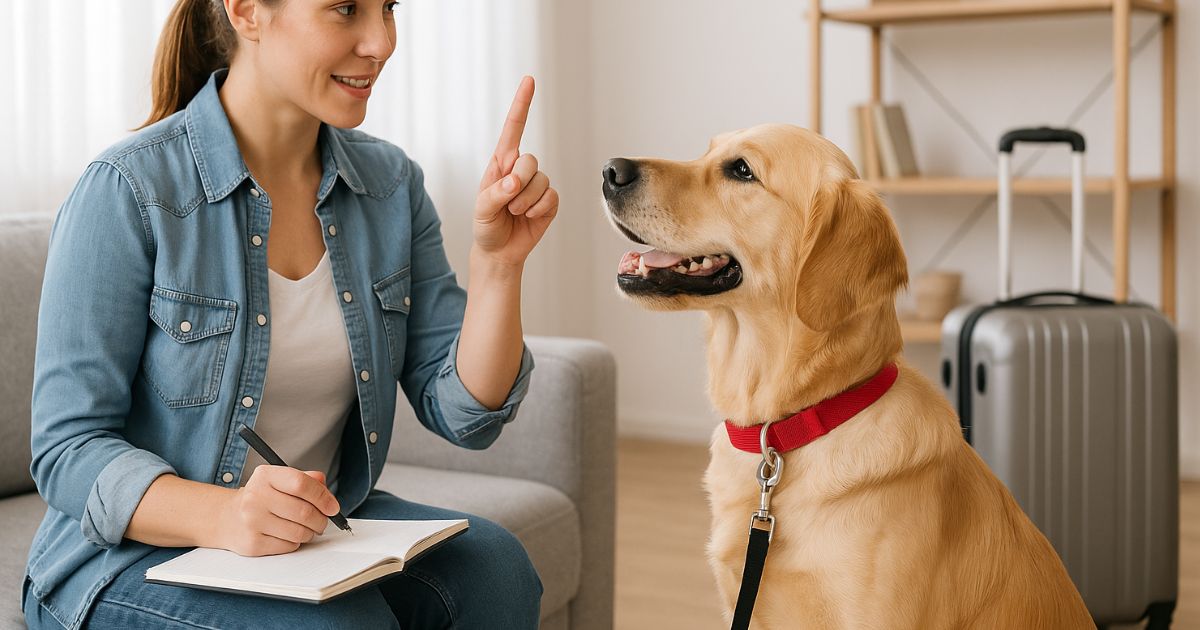
Planning international travel with your dog in 2+ months? Perfect timing! This vet-approved 8-week program prepares your dog for flights, trains, hotels, and new environments. Follow week-by-week and your dog will be a confident travel companion.
Start NOW—last-minute training doesn’t work for travel preparation. ✈️🐕📋
🎯 Program Overview
What This Program Covers:
✅ Carrier/Crate comfort (essential for flights & trains) ✅ Bladder control extension (6-8 hour capacity) ✅ Noise desensitization (planes, trains, cities) ✅ Separation tolerance (hotels, pet-friendly spaces) ✅ Public behavior (cafés, trains, airports) ✅ Health preparation (vet checks, vaccinations) ✅ Emergency protocols (what if scenarios)
Time Commitment:
- 30-45 minutes daily training
- 8 weeks minimum (don’t rush!)
- Best results: Start 10-12 weeks before travel
Success Rate:
- Dogs completing full program: 90% travel successfully
- Dogs with partial training: 60% have issues
- No training: 40% have significant problems
📅 WEEK 1: Foundation & Assessment
Goals:
- Assess your dog’s current travel readiness
- Introduce carrier/crate
- Establish baseline behavior
Daily Tasks:
Day 1-2: Assessment
- ✅ Test current carrier tolerance: Can dog enter willingly? Stay 5 minutes?
- ✅ Measure bladder control: How long between potty breaks naturally?
- ✅ Evaluate anxiety: How does dog react to loud noises, strangers, new places?
- ✅ Vet appointment: Schedule pre-travel health check
Day 3-4: Carrier Introduction
- ✅ Place carrier in living room, door open
- ✅ Put favorite blanket + treats inside
- ✅ DO NOT force dog in—let them explore
- ✅ Feed meals NEAR carrier (not inside yet)
Day 5-7: Positive Carrier Association
- ✅ Play games near carrier
- ✅ Drop treats inside randomly throughout day
- ✅ Praise heavily when dog investigates carrier
- ✅ Goal: Dog enters carrier willingly for treat
Week 1 Checklist:
- Vet appointment scheduled
- Carrier/crate purchased (airline-approved if flying)
- Baseline bladder control measured
- Dog enters carrier willingly for treats
Red Flags: Dog terrified of carrier, aggressive toward crate, refuses to approach even with treats = consult professional trainer before continuing
📅 WEEK 2: Carrier Comfort & Bladder Extension
Goals:
- Dog stays in carrier 15-30 minutes comfortably
- Begin extending time between bathroom breaks
- Introduce travel sounds
Daily Tasks:
Carrier Training (2x daily, 15 min sessions):
- ✅ Lure dog into carrier with treat
- ✅ Close door for 30 seconds, then open immediately
- ✅ Gradually increase: 1 min → 2 min → 5 min → 10 min → 15 min
- ✅ Stay nearby, calm reassurance if dog whines
- ✅ Release BEFORE dog panics (build positive association)
Bladder Control Extension:
- ✅ Measure current time between potty breaks
- ✅ Add 15 minutes to wait time
- ✅ Example: If dog goes every 4 hours → try 4 hours 15 min
- ✅ Success? Add another 15 min next day
- ✅ Accident? Return to previous time, try again in 2 days
Sound Desensitization (Start Low Volume):
- ✅ Play airplane cabin sounds on YouTube (10 min daily)
- ✅ Volume: Barely audible
- ✅ Pair with treats/play (dog associates sound with good things)
Week 2 Checklist:
- Dog stays in carrier 15+ minutes without distress
- Bladder control extended by 30-45 minutes
- Dog doesn’t react to low-volume airplane sounds
- Vaccinations up to date (if not, schedule now!)
📅 WEEK 3: Public Space Exposure & Noise Increase
Goals:
- Practice in dog-friendly public spaces
- Increase carrier time to 30-60 minutes
- Louder sound desensitization
Daily Tasks:
Public Exposure (3-4 times this week):
- ✅ Visit dog-friendly café: 30 min, dog must stay calm under table
- ✅ Walk through busy area: Downtown, mall parking lot (not inside)
- ✅ Practice “wait” command: Dog sits calmly while you order coffee
- ✅ Reward calm behavior heavily, ignore/redirect anxious behavior
Carrier Training Level 2:
- ✅ Dog in carrier for 30-45 minutes
- ✅ You leave room for 5 minutes (practice separation)
- ✅ Carrier in car (engine off) for 15 minutes
- ✅ Drive around block with dog in carrier (short 5-10 min trips)
Sound Desensitization Level 2:
- ✅ Increase airplane sounds to medium volume
- ✅ Add train sounds, city noise recordings
- ✅ Play during meal times (positive association)
- ✅ Duration: 20-30 minutes daily
Bladder Control:
- ✅ Target: Add another 30-45 minutes to wait time
- ✅ Most dogs should be at 5-6 hours by now
Week 3 Checklist:
- Successfully visited 3 public dog-friendly locations
- Dog calm in carrier for 45+ minutes
- Bladder control: 5-6 hours
- Dog ignores medium-volume travel sounds
Troubleshooting:
- Dog reactive to other dogs in public? → Work with trainer on reactivity first
- Still won’t stay in carrier 30 min? → Slow down, don’t rush
- Accidents during bladder training? → Vet check for medical issues
📅 WEEK 4: Simulated Travel Days
Goals:
- Full-length carrier sessions (2-3 hours)
- Practice “travel day” routine
- Health documentation preparation
Daily Tasks:
Travel Day Simulation (Do 2-3 times this week):
Morning:
- ✅ No food after 7am (simulate pre-flight fasting)
- ✅ Last potty break at 9am
- ✅ Dog in carrier at 10am
- ✅ Carrier in car, drive to park/pet store (30-60 min away)
- ✅ Dog stays in carrier during drive
- ✅ Arrive, give bathroom break
- ✅ Explore new location for 30 minutes
- ✅ Return home, dog in carrier again
- ✅ Total carrier time: 2-3 hours
Purpose: Simulates airport wait + flight + arrival
Health Preparation:
- ✅ Vet visit: Get international health certificate (if traveling abroad)
- ✅ Rabies vaccination update (if needed)
- ✅ Microchip check/registration
- ✅ Request copies of all medical records
- ✅ Ask vet about travel anxiety medication (prescription if needed)
Sound Desensitization Level 3:
- ✅ Full volume airplane/train sounds
- ✅ Add loudspeaker announcements, crowd noise
- ✅ Play during carrier sessions
Bladder Control:
- ✅ Target: 6-7 hours (most adult dogs’ capacity)
Week 4 Checklist:
- Completed 2-3 full travel simulations
- Dog stayed in carrier 2+ hours without major distress
- All health documents obtained/scheduled
- Bladder control: 6-7 hours
📅 WEEK 5: Environmental Changes & Hotel Prep
Goals:
- Practice sleeping in new environments
- Separation tolerance
- Nighttime carrier comfort
Daily Tasks:
Hotel Simulation (Do 2 times this week):
- ✅ Set up carrier in unfamiliar room (friend’s house, basement, guest room)
- ✅ Dog sleeps overnight in carrier in new location
- ✅ You sleep in same room but not next to carrier
- ✅ Practice “quiet” command if dog whines
Alternative: Actually book 1 night at dog-friendly hotel near home for practice!
Separation Tolerance:
- ✅ Leave dog alone in carrier (your home) for 1-2 hours
- ✅ Use camera to monitor (don’t interact if dog sees you)
- ✅ Return calmly, no dramatic reunion
- ✅ Goal: Dog rests quietly even when alone
Meal Schedule Adjustment:
- ✅ If traveling across time zones, start shifting meal times
- ✅ Example: Going to Europe? Feed 1 hour earlier each day
- ✅ By travel day, dog is eating on destination time zone
Public Transport Practice:
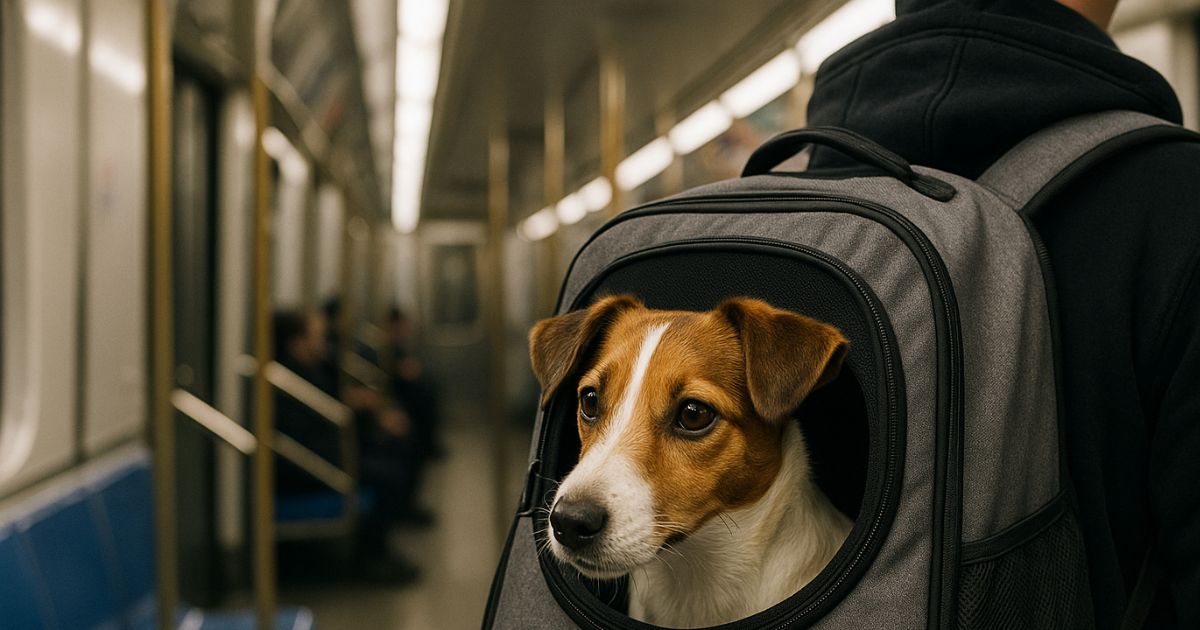
- ✅ If trains/buses allow dogs, take 30-60 min trip
- ✅ Dog in carrier or on leash (per local rules)
- ✅ Practice calm behavior around strangers
Week 5 Checklist:
- Dog slept overnight in carrier in new location
- Successfully left dog alone in carrier 1-2 hours
- Took public transport or simulated train/bus
- Meal times adjusting to destination time zone
📅 WEEK 6: Emergency Protocols & Advanced Scenarios
Goals:
- Teach emergency commands
- Practice worst-case scenarios
- Finalize travel logistics
Daily Tasks:
Emergency Command Training:
- ✅ “Emergency recall”: Dog comes immediately from any distraction (use special high-value treat only for this)
- ✅ “Stay”: Dog freezes even if frightened (practice with loud noises)
- ✅ “Quiet”: Dog stops barking on command (essential for hotels/trains)
Worst-Case Scenario Practice:
- ✅ Simulate flight delay: Dog in carrier 4-5 hours straight
- ✅ Crowded, chaotic environment: Take to busy place, practice calm
- ✅ Handling by strangers: Have friends pick up carrier (dog must stay calm)
- ✅ Unexpected bathroom situation: What if dog MUST pee indoors? (train to use pee pad as backup)
Travel Logistics Finalization:
- ✅ Book flights/trains (confirm pet policies)
- ✅ Reserve pet-friendly accommodations
- ✅ Research vet clinics at destination (save 24/7 emergency contacts)
- ✅ Purchase travel insurance (including pet coverage)
- ✅ Order/pack travel supplies (see checklist below)
Long-Duration Carrier Sessions:
- ✅ 3-4 hour session with sounds, distractions
- ✅ Simulate full flight experience at home
Week 6 Checklist:
- Dog responds to all 3 emergency commands reliably
- Survived 4-5 hour carrier session
- All travel bookings confirmed
- Emergency vet contacts saved for destination
📅 WEEK 7: Final Preparations & Dress Rehearsals
Goals:
- Full-scale travel rehearsals
- Pack and test all gear
- Final vet check
Daily Tasks:
Full Travel Rehearsal (Do 2 times):
Complete Simulation:
- Morning routine: Wake, no food, bathroom at scheduled time
- Drive to airport: 30-60 min, dog in carrier
- “Airport wait”: Sit in parking lot, carrier on ground, 1-2 hours
- “Flight”: Drive to farther destination (1-2 hours), dog in carrier
- “Arrival”: Take dog out, bathroom break, explore new area
- “Hotel”: Go to friend’s house or hotel, dog in carrier overnight
- Next day: Reverse journey home
Total practice time: 6-8 hours spread over 2 days
Gear Testing:
- ✅ Pack everything you’ll actually bring
- ✅ Test carrier lock (airline-approved?)
- ✅ Verify carrier fits under airplane seat (if flying cabin)
- ✅ Water bottle clips to carrier properly
- ✅ Absorbent pads line carrier correctly
- ✅ Collar has ID tag with destination contact info
Final Vet Visit:
- ✅ Health certificate signed (if international)
- ✅ Medications refilled (if needed)
- ✅ Ask any last-minute questions
- ✅ Get “fit to fly” confirmation
Week 7 Checklist:
- Completed 2 full travel rehearsals
- All gear tested and packed
- Final vet clearance obtained
- Dog handled 6-8 hours of simulated travel
Red Flag: If dog is still extremely stressed after 7 weeks, seriously reconsider the trip. Some dogs are not suited for international travel.
📅 WEEK 8: Taper & Confidence Building
Goals:
- Reduce training intensity (avoid burnout)
- Build confidence with positive experiences
- Final checklist completion
Daily Tasks:
Lighter Training Week:
- ✅ Short carrier sessions (30-45 min) to maintain comfort
- ✅ Focus on fun activities (not strict training)
- ✅ Visit favorite dog-friendly places for positive experiences
- ✅ Lots of praise, treats, play
Documentation Triple-Check:
- Passport/ID for human
- Pet passport (EU) or health certificate (international)
- Vaccination records (paper + photo backup)
- Microchip registration up to date
- Airline/train pet confirmation emails printed
- Hotel pet policy confirmation saved
- Travel insurance policy documents
- Emergency vet contacts at destination
Pack Travel Kit:
- Airline-approved carrier with absorbent pads
- Leash + collar with ID tag (destination contact info!)
- 3-day supply of food (in case of delays)
- Collapsible water bowl + water bottle
- Medications (if any) in original containers
- Waste bags
- Comfort items (favorite toy, blanket with your scent)
- First aid kit (gauze, antiseptic, tweezers)
- Recent photo of dog (if lost at destination)
- Copies of all documents (separate bag from originals)
Mental Preparation (For You!):
- ✅ Review emergency protocols
- ✅ Save destination vet contacts in phone
- ✅ Download offline maps of destination
- ✅ Learn basic phrases in destination language (“My dog needs a vet”)
- ✅ Accept that things may not go perfectly—flexibility is key!
Week 8 Checklist:
- All documents triple-checked
- Travel kit fully packed
- You feel confident and prepared
- Dog seems relaxed (not overtrained/stressed)
🎯 Success Markers: Is Your Dog Ready?
Before you travel, your dog should be able to:
✅ Stay calm in carrier for 6+ hours ✅ Hold bladder for 6-8 hours reliably ✅ Remain quiet in new environments ✅ Tolerate noise (planes, trains, crowds) ✅ Accept handling by strangers ✅ Respond to basic commands even when stressed ✅ Eat/drink in unfamiliar places
If your dog can’t do 6 of 7: Reconsider the trip or delay travel for more training.
🚨 When NOT to Travel (Even After Training)
Some situations where you should NOT travel internationally with your dog:
❌ Puppy under 6 months (immune system, bladder control not ready) ❌ Senior dog 12+ years with health issues ❌ Brachycephalic breeds flying (Pugs, Bulldogs—high risk in cargo/cabin) ❌ Severe separation anxiety (even after training) ❌ Reactive/aggressive dogs (liability risk abroad) ❌ Recent surgery/injury (wait 6+ months post-op) ❌ Chronic health conditions (diabetes, heart disease, kidney issues) ❌ Trip is optional (vacation vs. permanent relocation)
Alternative: Hire professional pet sitter, board at reputable facility, or have friend/family care for dog.
💰 Training Program Costs
DIY (This Guide):
- Carrier: $50-150
- Treats/toys: $30
- Vet visits: $150-300
- Practice trips: $50
- Total: $280-530
With Professional Trainer:
- 8-week program: $800-1,500
- Benefits: Expert guidance, faster results, problem-solving
- Total: $1,080-1,830
Worth it? Yes! Compare to:
- Cost of flight changes due to unprepared dog: $200-500
- Vet bills from travel stress: $300-1,000
- Dog getting lost/scared at destination: Priceless
📋 Day-of-Travel Checklist
Morning (6 hours before departure):
- Last meal (small portion, light food)
- Exercise (tire dog out but not exhausted)
- Final bathroom break before leaving home
3 Hours Before Departure:
- Last water (small amount)
- Bathroom break #2
- Put dog in travel carrier at home (familiar start)
1 Hour Before:
- Final bathroom break at airport/station
- NO more water until after travel
- Calming treats/medication (if vet-approved)
During Travel:
- Stay calm yourself (dog senses your stress!)
- Follow airline/train staff instructions
- Monitor dog if possible (cabin), trust process if cargo
Arrival:
- Immediate bathroom break
- Small amount of water
- Light meal (1/2 normal portion)
- Calm, quiet environment for first few hours
❓ FAQ: Training for Travel
What if I only have 4 weeks, not 8?
Possible but risky. Compress the program: do 2 weeks’ worth of training per week. Focus priorities: (1) Carrier comfort, (2) Bladder control, (3) Sound desensitization. Skip less critical parts (public space exposure, hotel simulations). Honest assessment: If your dog already has travel experience and good temperament, 4 weeks can work. If completely untrained dog, postpone trip or hire professional pet transport service instead of DIY.
My dog is already crate-trained. Can I skip weeks 1-3?
Skip Week 1, do accelerated Weeks 2-3. Crate-trained at home ≠ carrier-trained for travel. Differences: Travel carriers smaller, must fit under seat, different shape/material, used in moving vehicles. Do this: Test current crate tolerance with TRAVEL carrier specifically. If dog comfortable immediately, move to Week 4 training. Still do sound desensitization and bladder extension (those are separate skills). Don’t skip: Travel simulations (Weeks 4-7)—those are critical even for crate-trained dogs.
Should I use sedatives for travel?
Only with vet approval, and NOT acepromazine for flying! Some sedatives are DANGEROUS at altitude (cargo hold). Vet-approved options: Trazodone (anti-anxiety), Gabapentin (calming + pain relief), CBD oil (natural, usually safe). NEVER use: Acepromazine for flights (can cause cardiovascular issues at altitude). Best approach: Proper training should eliminate need for heavy sedation. Mild anti-anxiety medication is okay for very nervous dogs, but unconscious sedation is risky. Test first: Give medication at home 1 week before travel to see how dog reacts. Don’t wait until travel day!
🎯 Final Words: You’ve Got This!
8 weeks seems long, but it passes quickly. The investment in training makes the difference between:
❌ Untrained dog: Stressed, accidents, barking, possible injury, traumatic experience ✅ Trained dog: Calm, confident, safe, enjoyable travel for everyone
Start today. Your future traveling self (and your dog!) will thank you. ✈️🐕💚
Related guides:
- Train vs Plane with Dogs - Choose your travel method
- Dog Bladder Control on Flights - Essential info
- Complete Europe Dog Travel Guide - Full preparation